 Peekwick
Ghent
Brussels · Squares and streets · 4 h 30
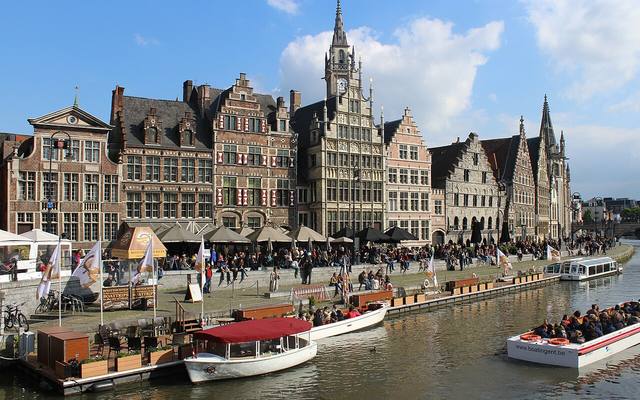
A powerful city in the Middle Ages
Ghent grew up where two rivers meet, the Scheldt and the Leie. In the Middle Ages, it was one of the largest cities in Northern Europe, enriched by wool and cloth. Thousands of weavers and fullers worked within its walls. The inhabitants, proud and independent, often stood up to their lords. In 1500, Emperor Charles V was born here. In 1539, the people of Ghent rebelled against him, and he punished them harshly. He made the leading citizens parade in their shirts, with a rope around their necks. Since then, the inhabitants have been nicknamed "those who carry the rope," the Stroppendragers. Later, in 1814, a treaty signed in Ghent ended a war between Great Britain and the United States. Today it is a lively student city, with a center largely free of cars.
In the app, this story goes on for 6 parts, to read or listen to, with one voice for grown-ups and another for kids.
A row of rival houses
Stand on Saint Michael's Bridge, with your back to the church. Look at the houses squeezed along the water. They almost touch, but none looks like its neighbor. Some have stepped gables, others carved decorations. They are the old houses of the guilds, very proud groups of trades. Each one wanted to have the most beautiful facade! Now look up toward the center. Three towers follow one another: Saint Nicholas' Church, the belfry and the cathedral. You have just discovered the best viewpoint in Ghent.
In the app, this story goes on for 7 parts, to read or listen to, with one voice for grown-ups and another for kids.

The full stories, the audio, the offline map and the challenges for kids.
Read next
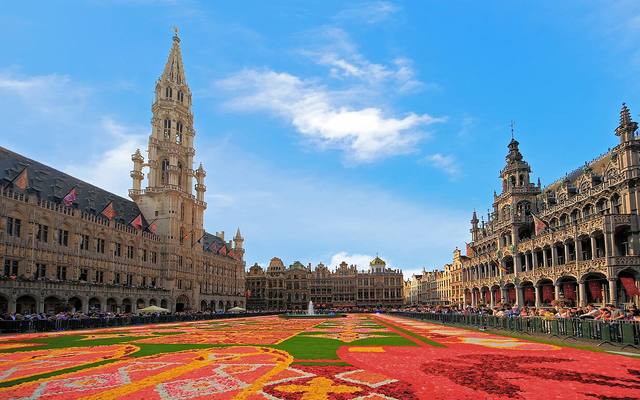 EventsBrussels at Christmas with kids: what to do over the 2026-2027 holidaysBrussels at Christmas with kids: the Plaisirs d'Hiver market from 27 November to 3 January, Grand-Place, chocolate, comics, Atomium and museums, with dates to confirm.November 13, 2026
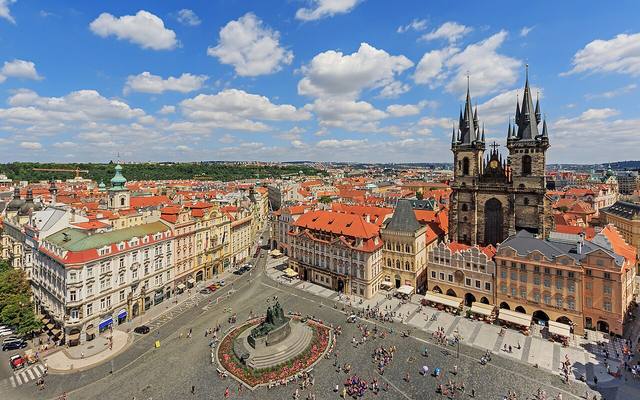 EventsChristmas markets with kids 2026: 9 cities, dates and tipsVienna, Prague, Brussels, Zagreb, Copenhagen, London: the 2026 dates of Europe's big Christmas markets and festivals, and what kids enjoy in each city.October 13, 2026