Peekwick
Croix-Rousse Plateau
Lyon · Croix-Rousse and the Canuts · Hills and Views · 1 h 30
A District That Became Canut
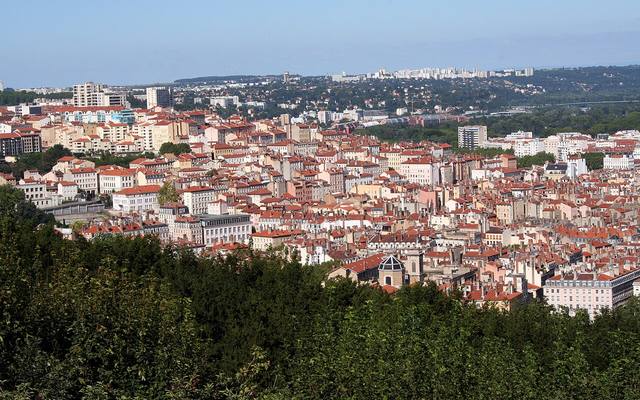
Croix-Rousse is officially joined to the city of Lyon only in 1852. Before that date, it was a fully independent district, taxed less heavily than the Lyon city center. In the seventeenth and eighteenth centuries, old lands belonging to religious communities are gradually turned to more profitable economic uses. At the very start of the nineteenth century, the booming silk industry settles there in large numbers, taking advantage of the clean air and natural light of the hilltop. One landmark tells the story of this annexation: the Gros Caillou, at the top of Boulevard de la Croix-Rousse, on the east side, with a view of the Rhône and the Alps. It is a block of quartzite from the Alps, an erratic boulder left by a glacier. It was found around 1861, while digging the tunnel for the ficelle, the funicular. It became the symbol of the perseverance of the people of Lyon and of the joining of Croix-Rousse to Lyon in 1852. It was moved about thirty meters during a redevelopment.
In the app, this story goes on for 5 parts, to read or listen to, with one voice for grown-ups and another for kids.
A Hill Full of Weavers
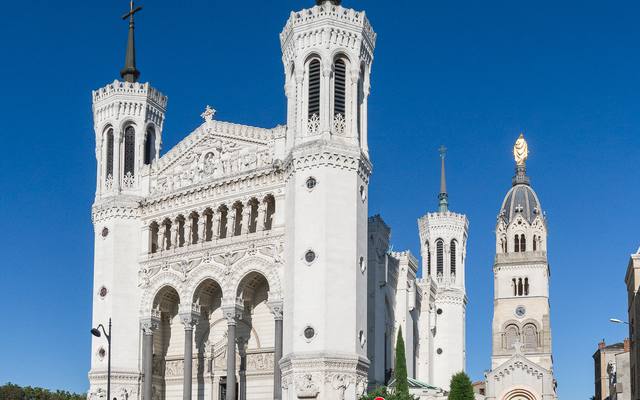
Thirty thousand workers lived and worked on the slopes of Croix-Rousse Hill about 200 years ago. Each of them had his own loom in his house. Each patiently made luxury fabrics for the most powerful kings and emperors in the world. The whole hill rang with the nonstop noise of looms. It was like an immense, giant factory set up in the open air. Lyon became famous all over the world for its magnificent silk. That is why the people of Lyon call Croix-Rousse the hill that works, facing Fourvière, the hill that prays.
In the app, this story goes on for 5 parts, to read or listen to, with one voice for grown-ups and another for kids.

The full stories, the audio, the offline map and the challenges for kids.