 Peekwick
Museum of the History of Madrid
Madrid · Malasaña and Chueca · Museums · 45 min
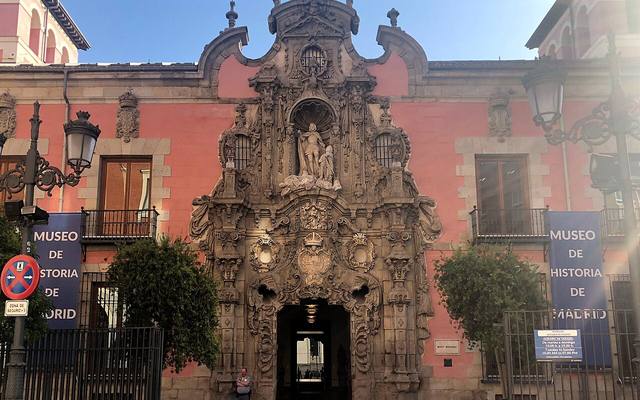
A Hospice Turned Museum
The museum occupies part of the former royal hospice of San Fernando, founded in 1673 to take in the poor, the orphans, and the beggars of Madrid. At that time, many European cities opened this kind of institution to house and feed the most needy people, often in exchange for work. In the eighteenth century, the city entrusted the rebuilding of the building to the architect Pedro de Ribera, who delivered the new complex between 1721 and 1726. The place kept its charitable role for a long time, well after its architect's death. Its facade was listed as a historic monument in 1919. The municipal museum opened in this same building in 1929, before taking its current name, the Museum of the History of Madrid, in 2007.
In the app, this story goes on for 7 parts, to read or listen to, with one voice for grown-ups and another for kids.
A Refuge for Poor Children
Imagine you live in Madrid 300 years ago, and your family no longer has enough to feed you. You are taken to a big building on Calle de Fuencarral. There, hundreds of orphans and poor children sleep, eat, and learn a trade, beneath an immense carved stone doorway. This building was called the hospice of Madrid, a word that means a refuge for people without money. Today, it houses a museum that tells the whole history of the city.
In the app, this story goes on for 7 parts, to read or listen to, with one voice for grown-ups and another for kids.

The full stories, the audio, the offline map and the challenges for kids.