 Peekwick
Habitat 67
Montreal · Lachine Canal, Atwater and Habitat 67 · Monuments and Heritage · 30 min
A thesis that became a building
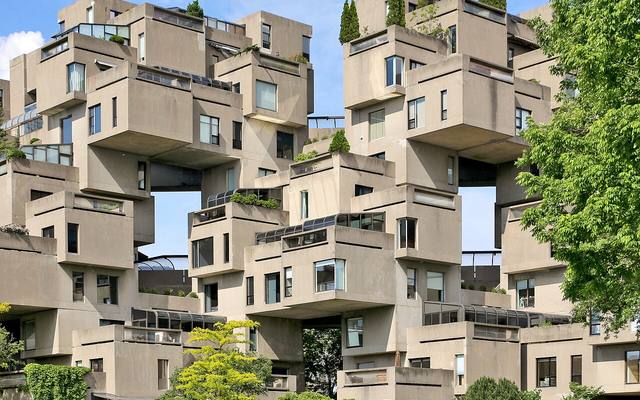
The story of Habitat 67 begins in a classroom at McGill University. In 1961, an architecture student, Moshe Safdie, wrote a paper that could be translated as A Case for City Living. Born in Haifa in 1938, he arrived in Montreal with his family at fifteen. His idea is simple: housing made of prefabricated boxes stacked together, where each family keeps the advantages of a house. He wanted air, light, privacy and above all a garden. His slogan was: a garden for everyone. A few years later, the 1967 World's Fair was looking for bold projects. When Expo 67 opened, Safdie was only twenty-eight, and his thesis idea existed for real.
In the app, this story goes on for 6 parts, to read or listen to, with one voice for grown-ups and another for kids.
A student and his cubes
His name was Moshe Safdie, and he was barely over twenty when he had a wild idea. He was studying architecture in Montreal and dreamed of a building where every family would have a garden. To make his models, he even used Lego bricks, you know, the same ones as in your room. His idea was to build big boxes in a factory, then stack them like a building set. A few years later, his idea became a real building, built for a great fair.
In the app, this story goes on for 6 parts, to read or listen to, with one voice for grown-ups and another for kids.

The full stories, the audio, the offline map and the challenges for kids.