 Peekwick
Safdarjung's Tomb
New Delhi · Hauz Khas and Safdarjung · Tombs and mosques · 1 h 15
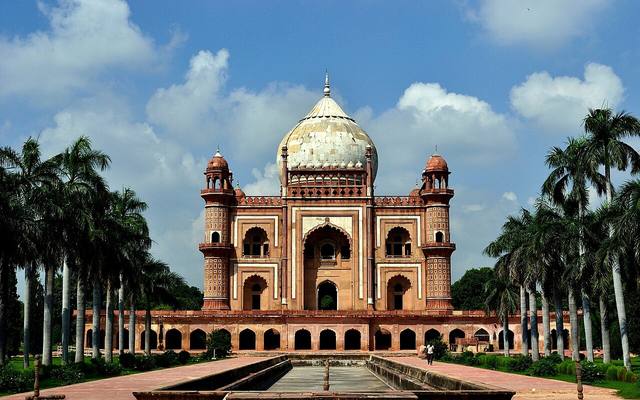
The last great Mughal tomb
Safdarjung's Tomb is often presented as one of the last great Mughal-style mausoleums built in Delhi. Safdarjung was a nobleman of Persian origin. He became nawab of Awadh, a rich province in northern India, and then chief minister of the Mughal emperor. He died in 1754. His son, Shuja-ud-Daula, had this monument built in his memory. The architect is said to have been a man named Bilal Muhammad Khan, from Abyssinia, which is present-day Ethiopia. By then, the Mughal empire was already very weak. Its emperors had almost no money or power left. So the tomb is less colossal than Humayun's, but it is still elegant and very carefully made.
In the app, this story goes on for 5 parts, to read or listen to, with one voice for grown-ups and another for kids.
A minister and his son
Safdarjung was a very important man, like a great minister, in the days when very rich emperors, the Mughals, ruled India. When he died, his son wanted to give him a magnificent final home. So he had this monument built, more than two hundred fifty years ago. It is not a palace to live in. It is a tomb! It stands, all white and red, in the middle of a garden so big that you could play soccer on every path.
In the app, this story goes on for 5 parts, to read or listen to, with one voice for grown-ups and another for kids.

The full stories, the audio, the offline map and the challenges for kids.