 Peekwick
Cable Car Museum
San Francisco · Nob Hill, Russian Hill and Lombard Street · Museums and science · 45 min
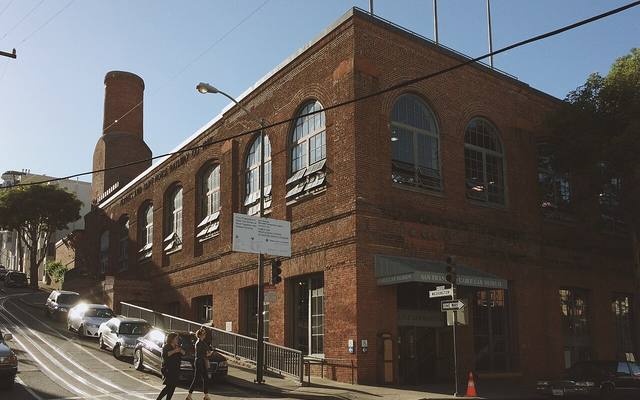
The Machinery Under the Street
The principle fits in one sentence: a steel cable runs endlessly under the street, and the car grabs it or lets go of it. Between the rails, a slot in the ground lets a clamp pass through, the grip, which reaches down from the car to the cable. The driver is, in fact, called the gripman. To move forward, he squeezes the clamp onto the cable, like engaging the clutch in a car. To stop, he opens it and brakes. The cable is about three centimeters thick. It is made of six steel strands wound around a sisal core, which helps the grip. It runs at a constant speed, about fifteen kilometers per hour, and that speed also limits the cars going downhill.
In the app, this story goes on for 6 parts, to read or listen to, with one voice for grown-ups and another for kids.
An Inventor and Some Horses
His name was Andrew Hallidie, and he worked with steel cables. According to the story guides repeat, in 1869 in San Francisco he saw horses slip on wet cobblestones while pulling a streetcar up a hill. He then set out to find a way to climb the hills without horses. His answer was just one word: the cable. A few years later, in 1873, the city's first cable car climbed a slope, pulled by a cable hidden in the ground. The first test took place on August second, 1873, at four a.m., one day later than the date promised to the city.
In the app, this story goes on for 6 parts, to read or listen to, with one voice for grown-ups and another for kids.

The full stories, the audio, the offline map and the challenges for kids.