 Peekwick
The Castro, Harvey Milk, and the Rainbow Flag
San Francisco · Mission, Castro and Twin Peaks · Neighborhoods, streets and views · about 1 h
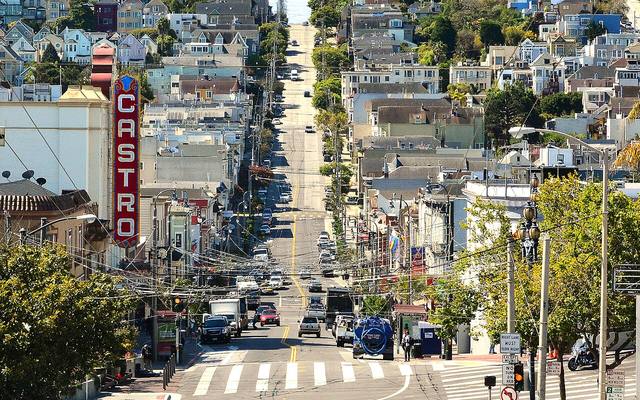
A Working-Class Neighborhood Turned Symbol
The Castro takes its name from Castro Street, itself named for Jose Castro, a Mexican general who played a political role in California in the 1830s. For a long time, it was a working-class neighborhood, home to Irish, German, Italian, and Scandinavian families. Since World War II, San Francisco had also welcomed people discharged from the military because of their orientation, and many had stayed in the city. Starting in the 1960s, many families left for the suburbs, and moderately priced Victorian houses attracted new residents. Among them were many gay men and women. In the 1970s, the Castro became one of the first neighborhoods in the United States where gay people settled openly and organized for their rights. In 2019, the city made it an official cultural district.
In the app, this story goes on for 6 parts, to read or listen to, with one voice for grown-ups and another for kids.
A Hand-Sewn Flag
His name was Gilbert Baker, and everyone knew his talent for sewing. In 1978, friends asked him to create a flag for the gay community. Gilbert chose the rainbow, because he wanted to show the diversity of people. Each color had a meaning: red for life, orange for healing, yellow for sunlight, green for nature, purple for spirit. With about thirty volunteers, he sewed and dyed the first two flags by hand. These flags were giant: taller than a three-story house, and twice as wide. They flew for the first time on June 25, 1978, during a big parade in the city.
In the app, this story goes on for 7 parts, to read or listen to, with one voice for grown-ups and another for kids.

The full stories, the audio, the offline map and the challenges for kids.