 Peekwick
Palace of Fine Arts
San Francisco · Marina and the Palace of Fine Arts · Monuments and history · 45 min
A Ruin Invented in 1915
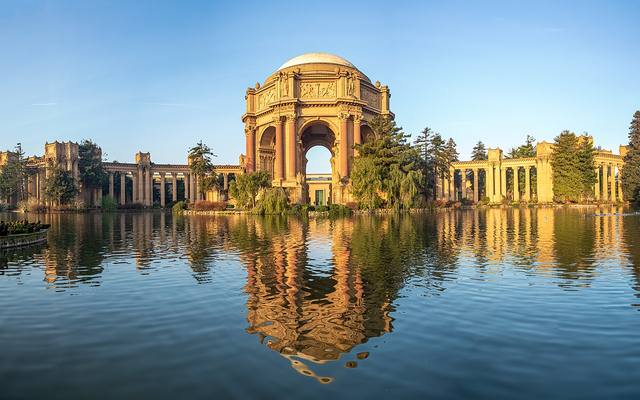
In 1915, San Francisco hosted the Panama-Pacific International Exposition. It celebrated the opening of the Panama Canal and showed the world that the city had risen from the 1906 earthquake and fire. The Palace of Fine Arts is one of the exposition's ten palaces, and it housed works of art. The architect Bernard Maybeck was given a precise assignment: to create a calm place between the fair's crowds and the galleries. The chief architect, Willis Polk, saw nothing to do with this muddy site. Maybeck saw a chance to create a mirror of water. He imagined a fake Roman ruin. He was inspired by the engravings of Piranesi, an eighteenth-century Italian engraver, and by Arnold Böcklin's painting Isle of the Dead. The first version of that painting dates from 1880.
In the app, this story goes on for 7 parts, to read or listen to, with one voice for grown-ups and another for kids.
It Is 1915
It is 1915. Nine years earlier, an earthquake and a fire almost wiped out San Francisco. Now the city wants to show the world that it has risen again, with an immense celebration: an international exposition. Palaces are being built all around. This one is special. Its architect, Bernard Maybeck, wanted it to look like a Roman ruin overgrown with plants. A brand-new ruin, made on purpose so you feel like you are walking through a very old dream.
In the app, this story goes on for 7 parts, to read or listen to, with one voice for grown-ups and another for kids.

The full stories, the audio, the offline map and the challenges for kids.