 Peekwick
Mycenae
Athens · Ancient ruins · about 3 h
A fortress above the plain of Argos
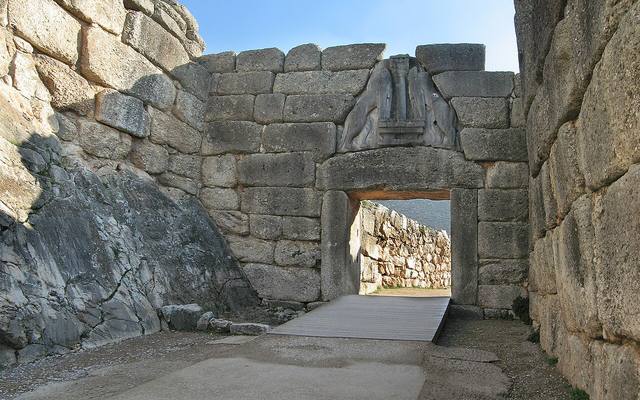
Mycenae stands on a hill between two mountains, in the northeast of the plain of Argos, in the Peloponnese. From the top, you see the plain stretching south and, on a clear day, the sea in the distance. This position let the city watch the roads between the plain and the Isthmus of Corinth. From the fourteenth to the twelfth century BC, the city gave its name to a whole civilization, called Mycenaean, which dominated a large part of mainland Greece. Homer makes it the city of Agamemnon, the leader of the Greeks at Troy, and calls it rich in gold. The walls were raised around 1350 BC. They are made of blocks so heavy that the Greeks of the classical era thought only the Cyclopes, one-eyed giants, could have lifted them. That is why we speak of Cyclopean walls. Around 1200 BC, the palace burned, like many others in the region, as this world collapsed. The site was later partly reoccupied, then the city was destroyed by Argos in 468 BC. In the second century AD, the traveler Pausanias found only ruins there, and already described the gate.
In the app, this story goes on for 7 parts, to read or listen to, with one voice for grown-ups and another for kids.
Two lionesses with no heads
For more than three thousand two hundred years, two stone lionesses have guarded a gate. They no longer have heads, and nobody really knows why. You are about to walk right under them. This is the entrance to Mycenae, the fortress of King Agamemnon, the one Homer talks about in the story of the Trojan War. The kings of Mycenae had this gate built to show they were rich and powerful. The lionesses do not move, but they tell every visitor: this is our home.
In the app, this story goes on for 7 parts, to read or listen to, with one voice for grown-ups and another for kids.

The full stories, the audio, the offline map and the challenges for kids.