 Peekwick
Athens
Greece
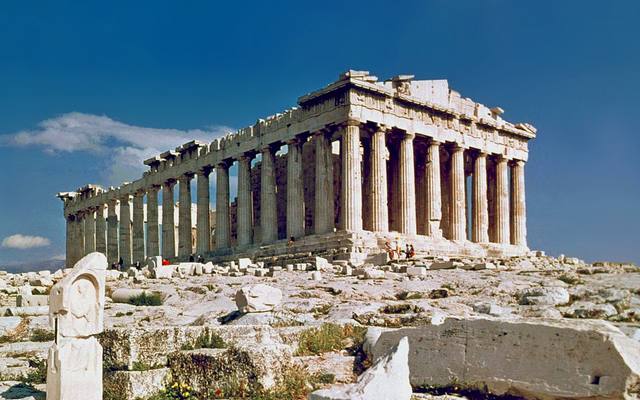
Athena's city
According to legend, Athena and Poseidon fought over the city. Poseidon struck the rock with his trident and a salty spring gushed out. Athena offered an olive tree, and the people chose the olive tree. An olive tree still grows on the Acropolis, on the spot of the legend. In the fifth century BC, under Pericles, Athens lived its golden age. It invented democracy, theater and philosophy, and built the Parthenon in about fifteen years.
From Romans to Ottomans
The Romans admired Athens so much that they sent their sons to study there, and Emperor Hadrian filled it with new monuments. The city then passed to the Byzantines, and later to the Ottomans for almost four centuries. The Parthenon became in turn a church, a mosque, and a gunpowder store. In 1687, during a siege, a Venetian cannonball made it explode. Some of its sculptures are now in the British Museum, and Greece is asking for them back.
The modern capital
In 1834, Athens became the capital of independent Greece. At that time it was only a small town of a few thousand people at the foot of the ruins. In 1896, it hosted the first modern Olympic Games in an ancient stadium rebuilt entirely in white marble. Today the urban area has almost four million inhabitants, more than one Greek in three.
How to read the city
Everything revolves around the rock of the Acropolis. At its foot, the Plaka district and its flowery lanes sit on the site of the ancient city, with the Agora, the public square where Socrates liked to talk. Farther on, Syntagma Square, in front of the Parliament, is the heart of the modern city. Lycabettus Hill overlooks it all, and the sea is only half an hour away by tram.
Two gods, one city
The story goes that two gods fought over this city. Poseidon, the god of the sea, struck the rock with his trident. A spring gushed out, but its water was salty. Athena, the goddess of wisdom, planted an olive tree, which would give shade, olives and oil. The people chose the olive tree, and the city took Athena's name: Athens. On the Acropolis, you can see an olive tree planted on the exact spot of the legend.
The temple with no straight lines
Did you know? The Parthenon looks perfectly straight, but it has almost no straight lines at all! Its columns bulge slightly in the middle and lean a little inward. Its floor is slightly curved. The Greek architects knew that the human eye bends long straight lines. So they curved everything on purpose, to make the temple look straight from far away.
The evzone challenge
In front of the Parliament, on Syntagma Square, soldiers stand guard in traditional costume. They are called evzones. Look at their shoes, with their big pompoms, and at their pleated skirt. Tradition says it has four hundred pleats, one for each year of Ottoman rule. Watch the changing of the guard, every hour. How many times do they raise a leg very high during their slow-motion march?
The quiz
In Greek, how do you say yes? Answer: neh! To us it sounds like a no, which causes a lot of mix-ups. And to say no, Greeks say ochi, often lifting their chin. Try to answer yes in Greek all day long without making a mistake.
Don't miss
ParthenonAncient ruins · 30 min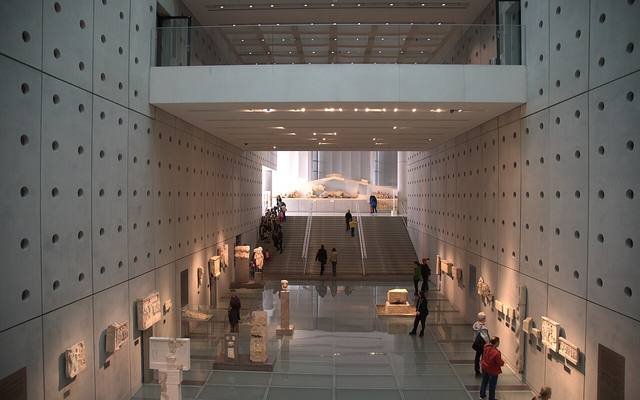 Acropolis MuseumMuseums · 1 h 30
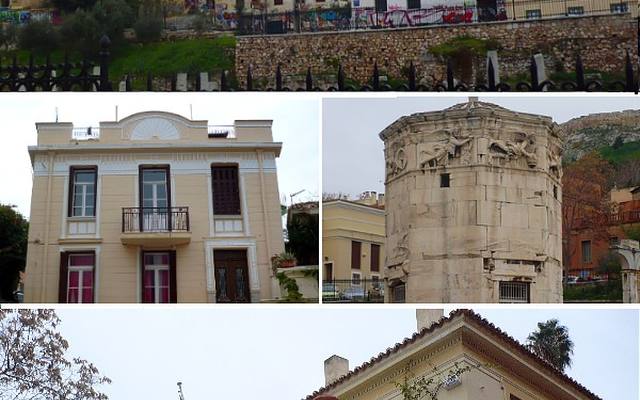 PlakaNeighborhoods and hills · 1 h 30
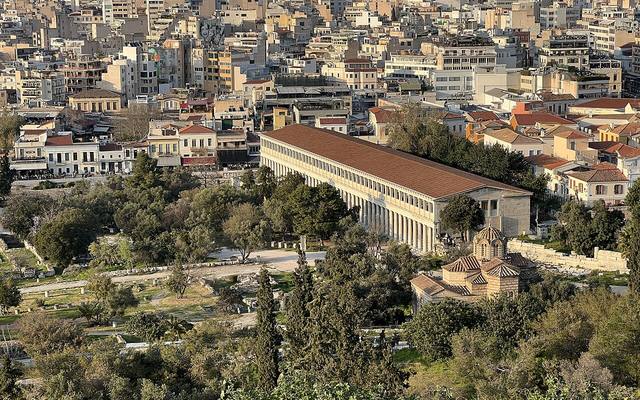 Ancient AgoraAncient ruins · about 2 h
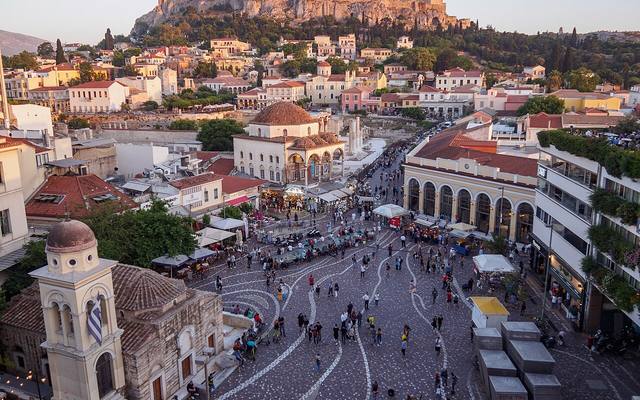 MonastirakiSquares and markets · 45 min
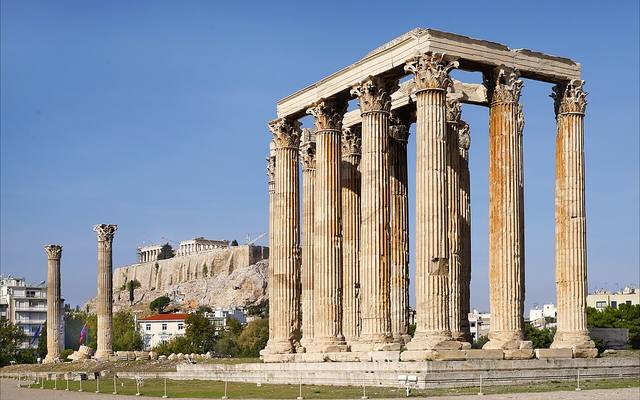 Temple of Olympian ZeusAncient ruins · 30 min
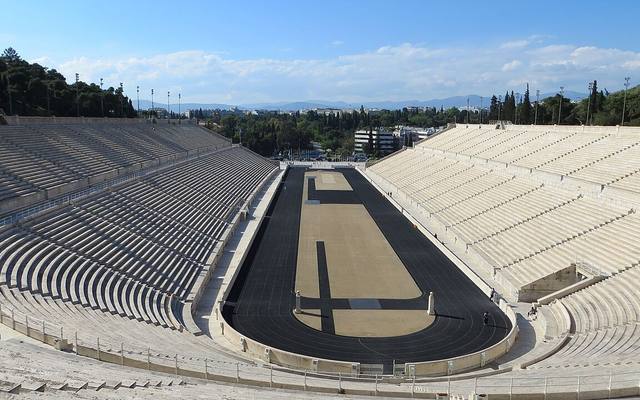 Panathenaic StadiumAncient ruins · 45 min
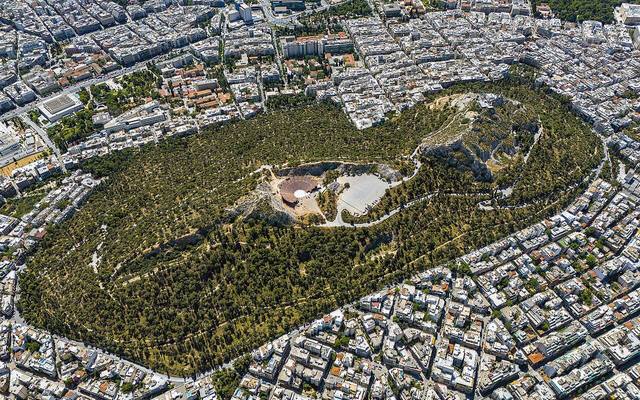 Mount LycabettusNeighborhoods and hills · about 1 h
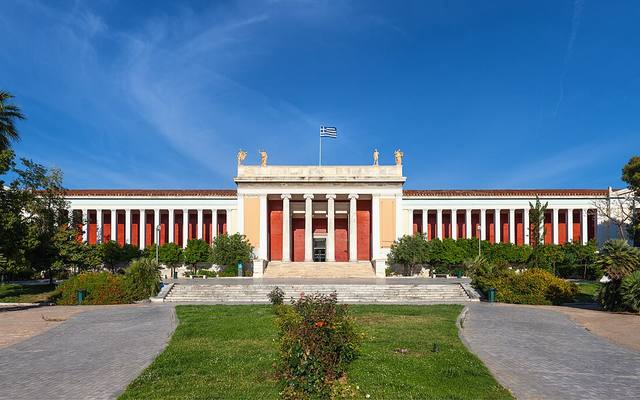 National Archaeological MuseumMuseums · 2 h 30
All places
Ancient ruins
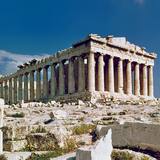 ParthenonAncient ruins · 30 minMust-see
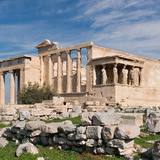 ErechtheionAncient ruins · 20 min
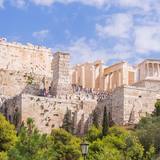 PropylaeaAncient ruins · 15 min
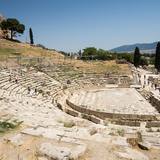 Theater of DionysusAncient ruins · 20 min
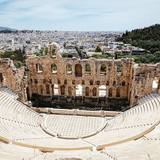 Odeon of Herodes AtticusAncient ruins · 15 min
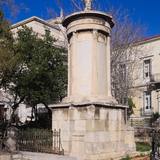 Monument of LysicratesAncient ruins · 15 min
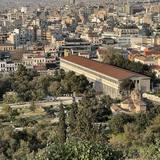 Ancient AgoraAncient ruins · about 2 hMust-see
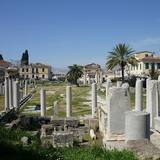 Roman AgoraAncient ruins · about 1 h
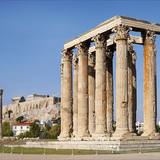 Temple of Olympian ZeusAncient ruins · 30 minMust-see
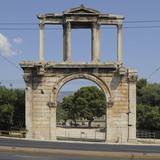 Hadrian's ArchAncient ruins · 10 min
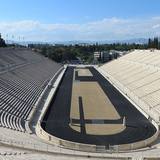 Panathenaic StadiumAncient ruins · 45 minMust-see
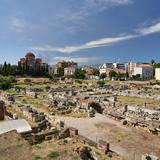 KerameikosAncient ruins · 50 min
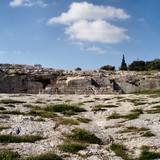 PnyxAncient ruins · 40 min
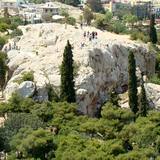 AreopagusAncient ruins · 25 min
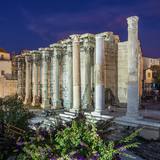 Hadrian's LibraryAncient ruins · 45 min
Museums

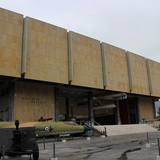
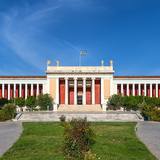
Squares and markets
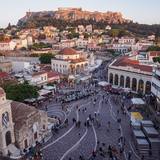
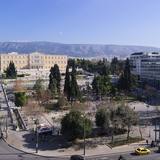
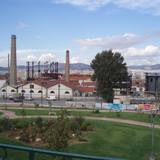

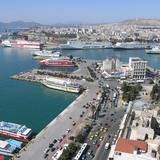
Byzantine churches
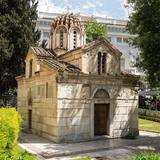
Neighborhoods and hills
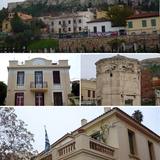 PlakaNeighborhoods and hills · 1 h 30Must-see
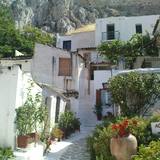 AnafiotikaNeighborhoods and hills · 45 min
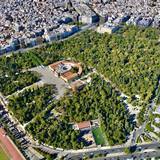 National GardenNeighborhoods and hills · 40 min
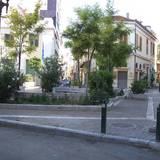 PsiriNeighborhoods and hills · 45 min
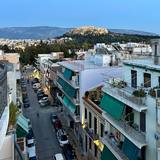 ThissionNeighborhoods and hills · 45 min
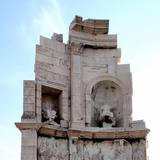 Philopappos HillNeighborhoods and hills · 50 min
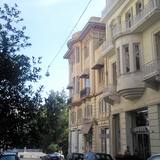 KolonakiNeighborhoods and hills · 45 min
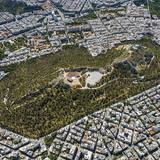 Mount LycabettusNeighborhoods and hills · about 1 hMust-see
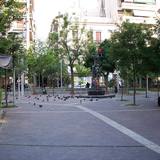 ExarchiaNeighborhoods and hills · about 1 h
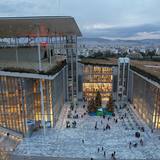 Stavros Niarchos Cultural CenterNeighborhoods and hills · about 2 h

The full stories, the audio, the offline map and the challenges for kids.