 Peekwick
Karl-Marx-Allee
Berlin · Friedrichshain and the Spree · Squares and Streets · about 1 h
An avenue for a new state
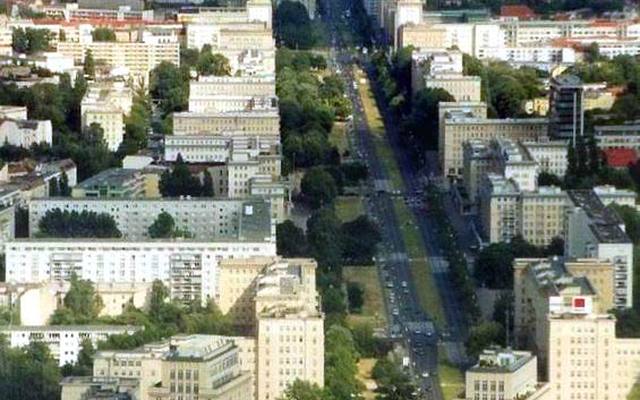
Karl-Marx-Allee was largely rebuilt after the destruction of the Second World War. It used to be called Stalinallee, in honor of the Soviet leader. Starting in 1952, its big apartment buildings were a major project of East Germany. The government wanted to show it could offer workers modern housing and a monumental setting. Yet the facades used classical forms, with columns, cornices, and ornaments. So the avenue is not a simple break with every older style. It reuses a prestigious language to tell the story of a new political order.
In the app, this story goes on for 6 parts, to read or listen to, with one voice for grown-ups and another for kids.
Buildings dressed as palaces
Can an ordinary building look like a palace? On this very wide avenue, yes. Homes here have the columns and cornices of palaces. Karl-Marx-Allee was rebuilt mostly after the war. From 1952, the East German government wanted to show off modern apartments for workers. The avenue was then called Stalinallee. Its name changed in 1961. So the facades tell a political idea, but they also hold real kitchens, real bedrooms, and the daily lives of many residents.
In the app, this story goes on for 5 parts, to read or listen to, with one voice for grown-ups and another for kids.

The full stories, the audio, the offline map and the challenges for kids.