Peekwick
The best museums for kids share one thing: you are allowed to touch. For under-sevens, try Explora in Rome, ZOOM in Vienna or the Young V&A in London. For ages seven to twelve, hands-on science museums such as NEMO in Amsterdam, the Spectrum in Berlin or the Cité des sciences in Paris fill a whole day. For teenagers, look for video game, transport and behind-the-scenes museums.
A museum bores a child for one simple reason: they keep being told not to touch. The museums in this article do the opposite. Here you weigh fruit, conduct an orchestra, set off a chain reaction or dress up as an archduchess. We have gathered them from six cities, Rome to Amsterdam, and sorted them by age, because that is what matters when you choose.
Every place mentioned is in our packs, with its stories for children. Visit times are those of our place pages.
The comparison at a glance
| City | Museum | Best age | Time | Good to know |
|---|---|---|---|---|
| Rome | Explora | up to 11 | 2 h | Closed Mondays, sessions of an hour and three quarters |
| Vienna | ZOOM Kindermuseum | 0 to 14, depending on the space | 2 h | Booking required, closed Mondays |
| Vienna | Kindermuseum Schönbrunn | from 3 | 1 h 30 | Open daily, timed ticket |
| London | Young V&A | all ages | 2 h | Free, open daily |
| Amsterdam | NEMO | all ages | 2 to 3 h | Timed ticket, free rooftop |
| Paris | Cité des sciences | 2 to 12 | 3 h | Closed Mondays, Cité des enfants by session |
| Berlin | Science Center Spectrum | children and teens | 1 h 30 | More than 150 hands-on stations |
| London | Science Museum | children and teens | 2 h 30 | Free entry, Wonderlab paid separately |
Ages 0 to 6: a museum at their height
Everything here is designed for small people. This is the rarest category, and the most precious.
Explora, the Children's Museum is Rome's children's museum, for little ones up to about eleven. It has a supermarket with real trolleys and a till, a water play basin with locks and mills, a vegetable garden and the Lunar Lab, where you set off for the Moon. Adults have to bend down to reach the products. The museum is closed on Mondays and runs in sessions of an hour and three quarters, so book online for weekends. There is a restaurant and a garden on site, and it is ten minutes on foot from Piazza del Popolo.
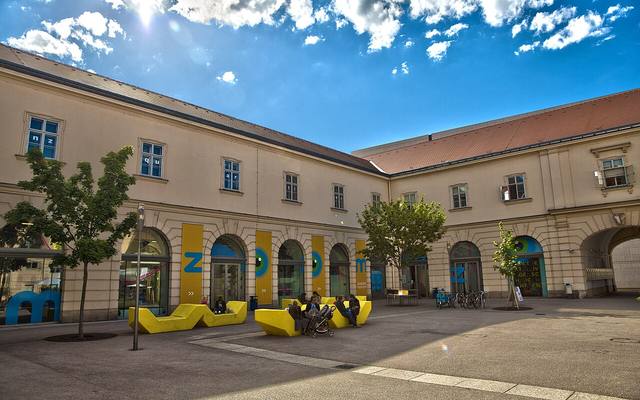
ZOOM Kindermuseum, the ZOOM Children's Museum is Austria's first children's museum, opened in 1994 in the emperor's former stables in the MuseumsQuartier. Each space targets an age. The Ozean welcomes toddlers, with a boat that has a real wheel, a lighthouse that talks and a tunnel of mirrors. The exhibition is for six to twelve-year-olds, the workshop for four to twelve, and the animation film studio for eight to fourteen. Children make a film frame by frame: place the modelling clay, take a photo, nudge it, repeat. Visits are by reservation only, in fixed time slots, and the museum is closed on Mondays. Dates open ten days ahead and go fast at weekends.
Schönbrunn Palace Children's Museum suits children from three. They try on costumes and wigs, learn the language of the fan and lay a table as for the emperor. Maria Theresa had sixteen children, among them Marie Antoinette, and the museum shows their daily life, which was stricter than you might think. It is open every day with a timed ticket, and combined tickets with the zoo or the maze exist.
Young V&A, in Bethnal Green, reopened in 2023 around three verbs: play, imagine, design. According to the museum, general admission is free with no booking, and it is open seven days a week. It closes from 24 to 26 December. Temporary exhibitions and events can cost money. Children must be supervised by an adult at all times. Allow two hours.
Ages 6 to 12: the reign of hands-on science
At this age a museum has to be done with the hands. Science museums are the safest bet.
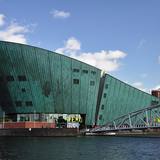
NEMO Science Museum is a big green building resting on top of a tunnel, designed by Renzo Piano. According to our pack, its rooftop has a city view and needs no ticket, except in bad weather or during events. It normally opens Tuesday to Sunday, and on Mondays only on certain dates, so check the calendar on the site. Tickets have a start time. Children love the chain reaction, which runs several times a day, and the laboratory. To extend the day, the Het Scheepvaartmuseum and the VOC Ship is close by, across the water, with its tall ship moored at the quay.
Science Center Spectrum has more than 150 stations to try: light, sound, motion, electricity. A tip from our stories for children: try an experiment, change one single thing, do it again, then tell the family what changed. It sits next to the German Museum of Technology but counts as a separate visit, so pick one or the other if the day is short.
Cité des Sciences takes half a day. The Argonaute submarine outside can really be visited, and the Géode reflects the sky like a distorting mirror. The Cité des enfants runs in two-hour sessions, by age group. The museum is closed on Mondays. Note that the space for ages 2 to 7 was closed for works, with a reopening announced for summer 2026. Check the official site before booking. The Parc de la Villette is right next door.
Science Museum has free entry, but you need to book a free slot if you also buy Wonderlab, the interactive gallery, which is paid separately. Look for the locomotive Puffing Billy as soon as you enter: it is the oldest in the world still in one piece. Then find the Apollo 10 module, nicknamed Charlie Brown. Arrive at opening time, before the school groups.
For animal lovers, two great classics: the Grande Galerie de l'Évolution, where a caravan of African animals walks under a light that changes like a savannah day, with a Children's Gallery designed for six to twelve-year-olds; and the Natural History Museum, where the blue whale skeleton Hope, about 25 metres long, greets visitors. Enter by Exhibition Road to skip the main queue.
Teenagers: video games, the DDR and behind the scenes
From twelve on, kids want an experience, not a route made for little ones.
The Video Game Museum tells the story of Pong, Atari, Nintendo and Sega, with machines to try. Look for the Poly-Play, East Germany's only arcade cabinet. The DDR Museum is visited by touching, opening drawers and trying things out; the rooms on surveillance and interrogation can be skipped with younger children. In Vienna, the Vienna Technical Museum is free for under-nineteens, and teenagers may be asked for ID. For seven to fifteen-year-olds, head for the Mobility exhibition and the techLAB workshop, where you tinker with 3D printers. In Paris, the Paris Sewer Museum suits children from about eight: you walk in real galleries at thirteen degrees, and the smell depends on the weather. In London, the The Postal Museum and Mail Rail runs a small train through the old mail tunnels; the ride needs booking.
"Serious" museums that work with children
Some classic museums become easy with one simple idea: see only three or four things.
- The Haus der Musik is for touching and listening. Children turn their first name into a melody, roll virtual dice to compose a waltz and conduct the Vienna Philharmonic on screen. Rest your ears: some rooms are loud.
- The Jewish Museum and Children's Museum houses the Jewish Museum Junior, for children from six: an imaginary house where everything can be touched.
- The Naturhistorisches Museum, the Natural History Museum is free for under-nineteens and closed on Tuesdays. The bird rooms are closed for works until autumn 2027.
- The Musée des Arts et Métiers has aircraft hanging in a former church and a Foucault pendulum.
- The London Transport Museum offers driving simulators and a play area, whose opening varies: check before you come.
Our tips for a good visit
- Keep it short. Two hours is almost always enough, three for science museums.
- One goal. Announce one thing to find: the whale, the locomotive, the Apollo 10 module. That is what our children's stories do with the "challenge on site".
- The right day. Avoid Monday and book for weekends.
- A break. Most of these museums have a cafe or a garden nearby.
Frequently asked questions
What is the best children's museum in Europe?
It depends on age. For the youngest, a museum where everything can be touched, such as Explora in Rome or ZOOM in Vienna. For older children, a hands-on science museum such as NEMO in Amsterdam or the Spectrum in Berlin. For teenagers, Berlin's video game museum or London's Science Museum.
Which museums are free for children?
Many big museums are free for children: at Vienna's Technisches Museum and Naturhistorisches Museum, entry is free for under-nineteens. In London, the Young V&A and the Science Museum are free, but the Science Museum's Wonderlab is a separate paid ticket. Rules change, so check before you go.
Do you need to book?
Often, yes. ZOOM in Vienna can only be visited in a booked time slot, NEMO in Amsterdam sells timed tickets, and Explora in Rome and the Cité des enfants in Paris run on sessions. Book especially for weekends and school holidays.
Which day should you avoid?
Monday. Explora, the Cité des sciences and ZOOM are closed that day, and NEMO opens on Mondays only on certain dates, often during Dutch school holidays. The Young V&A opens every day.
Which museums work best in the rain?
The big science museums: the Science Museum in London, the Technisches Museum in Vienna and NEMO in Amsterdam. Allow two to three hours, with a break at the cafe.
Places in this article
 Explora, the Children's MuseumMuseums · about 2 h
 ZOOM Kindermuseum, the ZOOM Children's MuseumMuseums · about 2 h
 Schönbrunn Palace Children's MuseumMuseums · 1 h 30
 Young V&AMuseums · about 2 h
 NEMO Science MuseumViews and family outings · about 2 hMust-see
 Het Scheepvaartmuseum and the VOC ShipMuseums · 1 h 40
 Science Center SpectrumMuseums · 1 h 30
 German Museum of TechnologyMuseums · about 3 hMust-see

The full stories, the audio, the offline map and the challenges for kids.