Peekwick
Rome, Paris, Vienna and Prague hide underground visits that children love, if you prepare them. For the youngest, choose the underground lake at Hinterbrühl near Vienna, the Paris sewers (from about five) or the underground levels of San Clemente in Rome. Save the Paris and Rome catacombs, the Capuchin crypts and the Kutná Hora ossuary for children who know what they will see. Whatever you choose, bring a jacket, closed shoes and a plan for coming back up to breathe.
Going underground makes children's hearts beat faster. The air turns cool, the light dims, voices echo. It is an adventure like any other, as long as you choose well. Here are four European cities and their underground visits, from the gentlest to the most striking, with what our stories suggest telling the children.
The choice at a glance
| Place | City | What you see | Good to know |
|---|---|---|---|
| Seegrotte | Vienna (Hinterbrühl) | A lake in a former mine, visited by boat | A fifty-minute visit, children under fourteen must be accompanied |
| Paris Sewer Museum | Paris | Real galleries, a hidden world | Recommended from about five, best from eight |
| Basilica of San Clemente | Rome | Three levels of history, down to a Roman street | No bones, levels of history |
| Catacombs of St Callixtus | Rome | Galleries of Christian tombs | Steep stairs, no pushchairs, closed on Wednesdays |
| Paris Catacombs | Paris | Quarry galleries and six million skeletons | Not for anxious or claustrophobic children |
| Capuchin Crypt | Rome or Vienna | Decorated bones (Rome) or the Habsburg coffins (Vienna) | Children who have been warned |
| Sedlec Ossuary | Kutná Hora, near Prague | A chapel decorated with bones | Children who have been warned |
An easy start: the underground lake near Vienna
The Seegrotte is about fifteen kilometres from Vienna, in Hinterbrühl. It is a former gypsum mine where an explosion in 1912 broke into a hidden pocket of water: the water filled the mine and formed an underground lake. You go down a staircase with a guide, then board a small boat, about sixty metres under the hill.
Practical points: no booking for families, a guided tour leaves about every thirty minutes, and the visit lasts fifty minutes. From November to March the cave is closed on Mondays. It is nine degrees all year: a warm jacket and closed shoes, no sandals. The stairs make a pushchair awkward. Children under fourteen must be accompanied by an adult. Half a day is enough, including a stroll in Mödling.
Paris: the sewers, then the catacombs
The Sewer Museum is visited in real galleries, at the foot of the Pont de l'Alma. It is about thirteen degrees, the smell changes with the weather, and the museum closes one day a week and when the Seine rises too high: check before you come. The recommended age starts at about five, and the visit is best from eight. Children learn that Paris has two thousand six hundred kilometres of tunnels, that Philippe Auguste had the streets paved around 1200, and that to clean them you roll a huge ball through the tunnel.
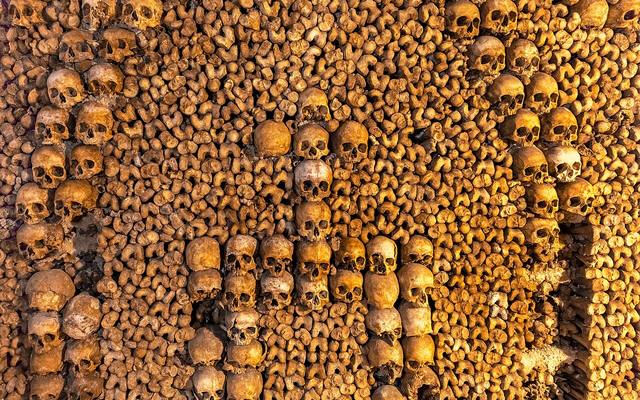
The Paris catacombs are stronger stuff. They began with a problem: in 1774 a whole street collapsed into the old quarries, and the city's cemeteries were full. So the bones of millions of people were stored in the quarries: about six million skeletons, moved at night, by cart, with priests singing behind. The skulls and long leg bones form neat walls.
Good to know: online booking is compulsory. The route goes down one hundred and thirty steps and comes back up by another staircase, with no way to turn back. Avoid it with impressionable or claustrophobic children. To motivate them, tell the story of Philibert Aspairt: in 1793 this hospital porter went down with a candle, got lost in the dark and was found only eleven years later, recognised by his keys. Challenge them to count the steps and look for the black line painted on the ceiling, which guided visitors in the past.
Rome: three levels of history and painted chambers
The Basilica of San Clemente is one of the best underground visits with children, because there are no bones. You go down it like a staircase through time: a medieval church with gold mosaics, an older church below, then a Roman street between two brick buildings, and at the very bottom a small temple of the god Mithras. The upper church is free, the underground levels are paid (an online ticket is advised). It is cool and damp below, pleasant in the heat.
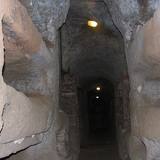
The Catacombs of St Callixtus are galleries of Christian tombs cut into the rock. Children learn that the fish, the anchor and the dove were coded messages, and that in 1593 an eighteen-year-old, Antonio Bosio, got lost in a catacomb, then devoted his life to exploring them. The visit lasts about forty-five minutes. Note: the site is closed on Wednesdays, the staircase is steep and unsuitable for pushchairs, and on some days the guided tour does not necessarily pass through the painted chambers: check the official website.
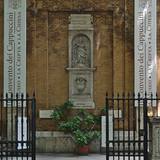
The Capuchin Crypt is more astonishing and harder: the walls and ceilings are decorated with real bones, from nearly four thousand Capuchin friars, arranged as flowers, stars and chandeliers. Photos are forbidden. The place can unsettle the youngest: prepare them before the visit.
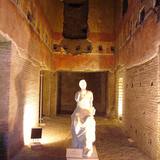
For a bone-free variant, the Domus Aurea, Nero's buried palace, can only be visited on a booked guided tour. It is about ten degrees all year, and the visit includes a virtual reality headset not recommended for the youngest.
Vienna: the Habsburg crypt
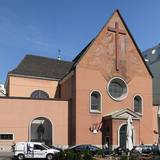
The Capuchin Crypt in Vienna holds nearly one hundred and fifty members of the Habsburg family, including twelve emperors, in metal coffins of all sizes. The first date from 1633. The crypt is open every day, with last entry half an hour before closing. The entrance is on Tegetthoffstraße, on the side of the church. It is silent and a little imposing: explain in advance to the youngest that it is a big family cemetery. Have them count the skulls and look for the wreaths. Afterwards, the fountain on nearby Neuer Markt is a good place to catch your breath.
Prague: the chapel of bones at Sedlec
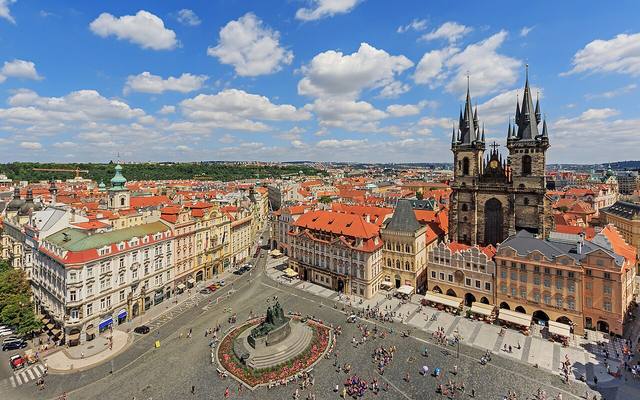
A day trip from Prague, the Sedlec ossuary in Kutná Hora is decorated with bones: between forty and seventy thousand, pyramids, garlands and a great chandelier. The sculptor František Rint did the work more than a hundred and fifty years ago. Everything is neatly arranged, and nothing is meant to frighten. The story is easy to tell: in 1278 an abbot brought back a handful of holy earth from Jerusalem and scattered it in the cemetery, and many people wanted to be buried there.
The ossuary visit lasts about half an hour. The rest of the day is gentler: St Barbara's church, patron saint of miners, and the Museum of Silver, in the former Hrádek castle, which offers a descent into a mine, for children old enough and to be booked in advance. Book a slot for the ossuary in high season, and check the shorter winter hours.
How to prepare the children
- Tell the truth, simply. Explain what there is to see before going in. Children who know are less afraid.
- Give a challenge. Counting steps, looking for a black line, a chandelier, an engraved fish: a goal occupies the mind.
- Plan an exit. Agree on a signal to leave. On some routes there is no turning back: choose them knowingly.
- Dress for the cold. A jacket, even in summer. Closed shoes.
- Keep the pace. One underground visit per day, followed by a park or an ice cream in the sun.
Prepare your visit with Peekwick
In the Peekwick app, every place has a story for adults and a story for children aged 7 to 15, with the detail to spot on site: the lost porter of the Paris catacombs, the coded messages of St Callixtus, the lake of the Seegrotte. You can read the stories at the entrance, and they give the visit a purpose, which helps children who feel a little uneasy.
Frequently asked questions
At what age can you take a child into catacombs?
There is no single age: it depends on the child. Our sheets advise avoiding the Paris catacombs with impressionable or claustrophobic children, and preparing younger ones before the Capuchin crypt in Rome or the Kutná Hora ossuary. The Paris sewers suit children from about five.
Do you need to book the Paris catacombs?
Yes. Online booking is compulsory and the queues without a ticket are endless. The route goes down one hundred and thirty steps and comes back up by another staircase, with no way to turn back.
Which underground visit for children who do not like bones?
The Seegrotte underground lake near Vienna, the Paris sewers, the levels of the basilica of San Clemente in Rome or the Roman houses of Palazzo Valentini, which tell the story of ancient life without a single skeleton.
Is it cold underground?
Often, yes. At the Seegrotte it is nine degrees all year. In the Paris sewers about thirteen degrees. In the Domus Aurea around ten degrees. Bring a jacket, even in summer.
Are pushchairs allowed?
Rarely. The Catacombs of St Callixtus in Rome have a steep staircase unsuitable for pushchairs, and the Seegrotte has stairs down to the boat. A baby carrier works better.
Places in this article
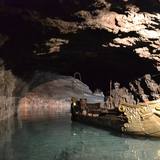 Seegrotte, the Underground Lake of HinterbrühlLeisure and animals · 1 h 30
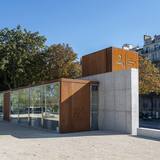 Paris Sewer MuseumMuseums · about 1 h
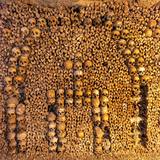 Catacombs of ParisMonuments · 1 h 15
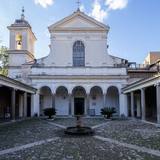 Basilica of San ClementeChurches & Secrets · 45 min
 Catacombs of Saint CallixtusAncient Rome · 45 minMust-see
 Capuchin CryptChurches & Secrets · 45 min
 Domus AureaAncient Rome · 1 h 15
 The Capuchin CryptChurches · about 1 h

The full stories, the audio, the offline map and the challenges for kids.