 Peekwick
The Lace Center, Kantcentrum
Bruges · Ramparts, windmills and Sint-Anna · Museums and visits · 45 min
Bruges lace
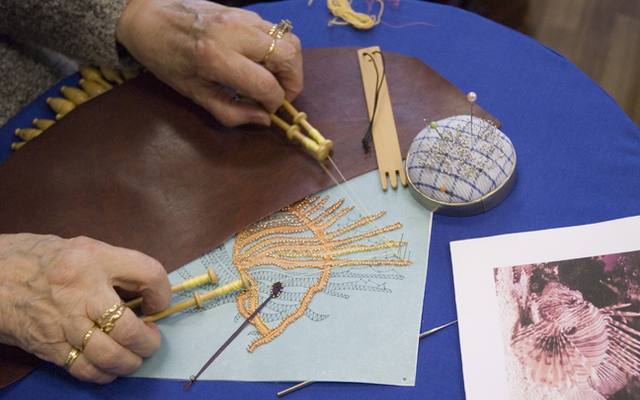
Lace is one of the great craft trades of Bruges. It appeared here in the sixteenth century, at first as a skill that mothers passed down to their daughters. For centuries it was a source of income for poor families: lace was made at home, for merchants who resold it at a very high price. To understand the Kantcentrum, you need to know where it came from. In 1717, faced with great poverty, Bishop Hendrik Jozef van Susteren brought in the Apostoline sisters. They opened a lace school to teach a trade to poor girls. By 1860 the school had four hundred pupils, who learned different types of lace. Kant, in Dutch, means lace, so the center is pronounced "kahnt-SEN-trum."
In the app, this story goes on for 6 parts, to read or listen to, with one voice for grown-ups and another for kids.
A giant bracelet
Have you ever made a bracelet with colored threads, crossing them over one another? Bruges lace is made a bit like that. Except that the lacemaker uses many more threads, and she makes incredible designs: flowers, leaves, birds. She works with small wooden spools, called bobbins, and with pins. In this museum, you are going to see how it works. And you will see that the lacemakers' hands move faster than a video gamer's! The center is called Kantcentrum, and you say it "kahnt-SEN-trum."
In the app, this story goes on for 6 parts, to read or listen to, with one voice for grown-ups and another for kids.

The full stories, the audio, the offline map and the challenges for kids.