 Peekwick
Bruges
Belgium
A port opened by a storm
Bruges has not always been the quiet city we know today. It received its town privileges in 1128. Six years later, in 1134, a great storm carved a channel to the North Sea, the Zwin. Ships then sailed almost to the foot of the houses. For three centuries, the city was one of the great crossroads of Europe: English wool, Flemish cloth, spices, silk, furs. Merchants from Germany, Italy and Spain set up their trading posts here.
The golden age of the Dukes of Burgundy
In the fifteenth century, the Dukes of Burgundy made Bruges one of their residences. In 1430, Philip the Good founded the Order of the Golden Fleece here. Bankers, merchants and artists followed the court. Jan van Eyck and Hans Memling painted portraits of astonishing precision here, which rank among the treasures of the Flemish Primitives. The guilds, the hospitals and the wealthy families commissioned paintings, tapestries and churches. A good part of the center we admire today dates from that time, often restored in the nineteenth century.
A decline that saved the city
At the end of the fifteenth century, the Zwin silted up. Ships could no longer pass, the merchants left for Antwerp, and Bruges fell asleep for a long time. In 1892, the writer Georges Rodenbach made it the setting of his novel Bruges-la-Morte. Yet this poverty had a happy effect: for lack of money, nobody razed the medieval center to rebuild it. From the nineteenth century on, this silence charmed travelers. UNESCO listed the historic center as a World Heritage Site in 2000.
A key to understanding it
To understand Bruges, look at the water. The canals are what remains of the old port, and the houses with stepped gables once faced the quays where goods were unloaded. An oval of water, the former moat of the ramparts, encircles the center. Today the city has about one hundred twenty thousand inhabitants and welcomes millions of visitors. Go out early in the morning or late in the evening, when the groups have left: it then becomes a peaceful little Flemish town again.
A storm changes everything
It is 1134. An enormous storm hits the coast of Flanders. The sea carves a passage all the way to Bruges. Little by little, boats arrive, loaded with wool, spices and fabrics. Over the years, this little town becomes one of the richest ports in Europe. But more than three centuries later, the sea pulls back and the passage fills with sand. The boats stop coming. Bruges falls asleep, and that is why you can still walk through streets more than six hundred years old.
The legend of the swans
Swans are everywhere on the canals. A legend tells why. A long time ago, the people of Bruges cut off the head of a man named Pieter Lanchals, who worked for a very powerful prince. Lanchals means long neck, like a swan's. To punish the city, the prince is said to have forced the people to keep swans on the water forever. It is a legend, but the swans are still here.
Your challenge for the trip
All through your stay, you are a detective. Your mission: find five things. A swan strolling along a canal. A stone bridge you pass under in a boat. A house whose roof has steps, like a staircase. A painting or a statue that shows an animal. And a piece of lace, as fine as a spiderweb. Note each find on your parents' phone. Once you have found all five, you are officially a detective of Bruges.
The quiz
Here is your question. Which white animal lives on the canals of Bruges, according to the legend you just heard? A duck, a swan or a goose? Think for a second. Answer: a swan, with its long neck. If you got it, you earn a waffle. If not, you earn a waffle too, but with a little less pride.
Don't miss
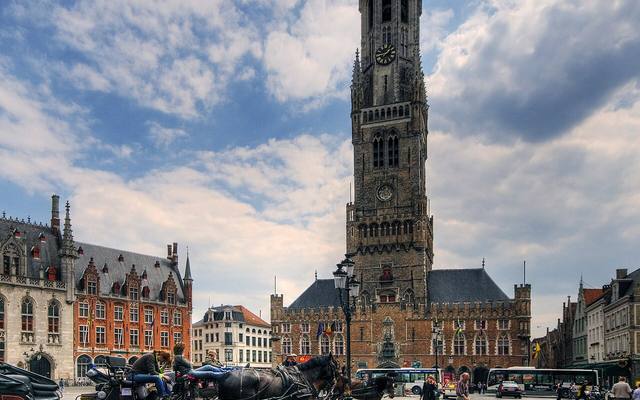
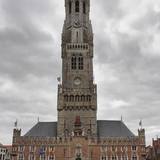
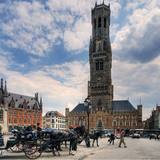
Markt, the Market SquareSquares · 30 min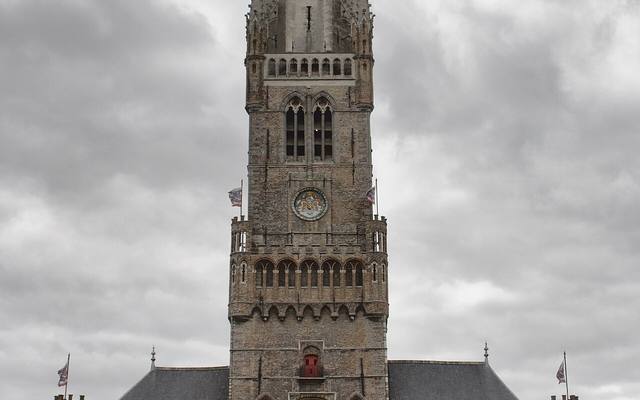 Belfry of Bruges, BelfortMonuments · 1 h 15
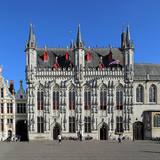
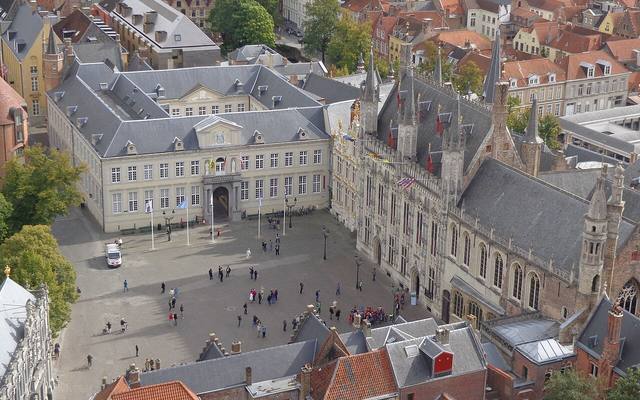 Burg SquareSquares · 30 min
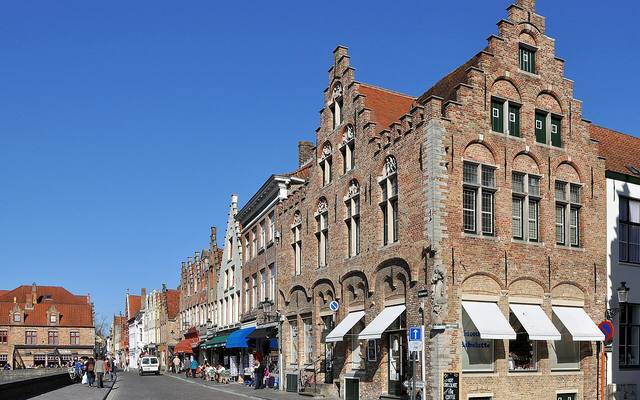 Rosary Quay, Rozenhoedkaai, and HuidevetterspleinCanals, parks and views · 30 min
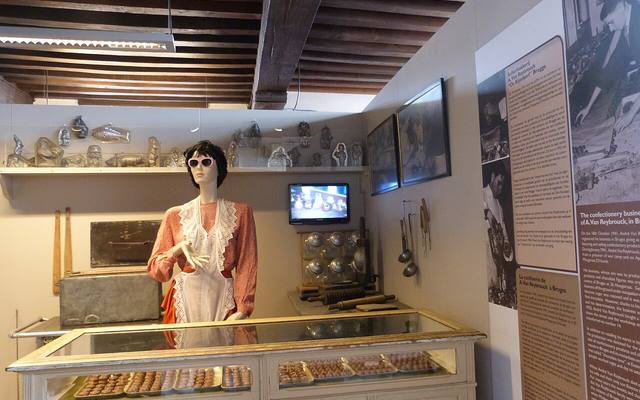 Choco-StoryMuseums and visits · 1 h 30
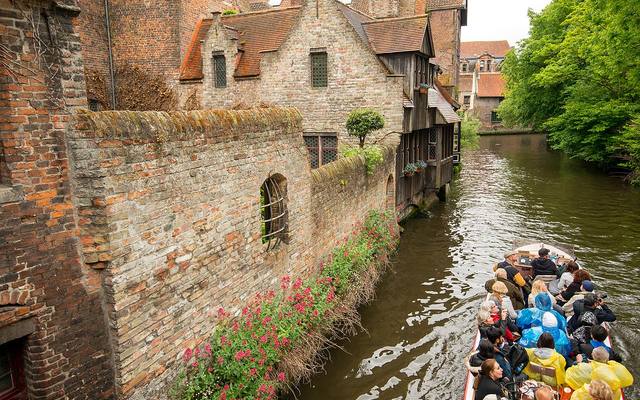 Canal boat rideCanals, parks and views · 45 min
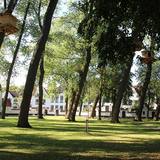
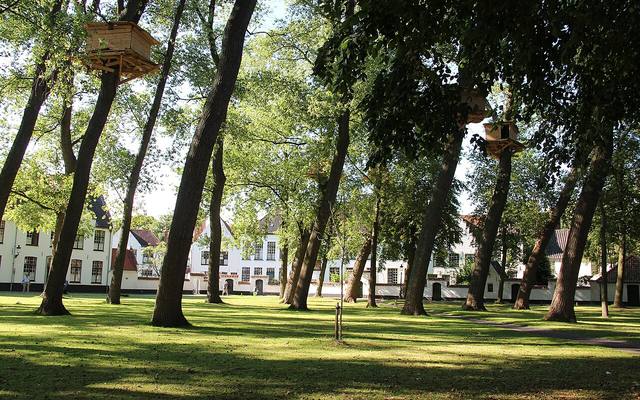 Beguinage, BegijnhofMonuments · 30 min
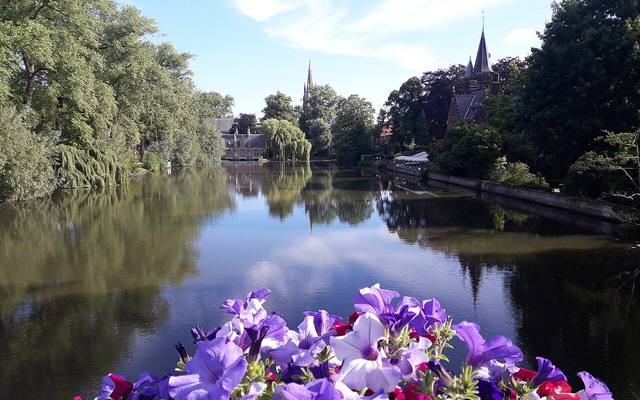 Minnewater, the Lake of LoveCanals, parks and views · 40 min
All places
Monuments
Museums and visits
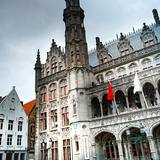 HistoriumMuseums and visits · 1 h 30
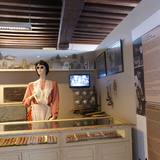 Choco-StoryMuseums and visits · 1 h 30Must-see
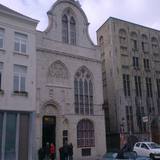 Fries Museum, FrietmuseumMuseums and visits · about 1 h
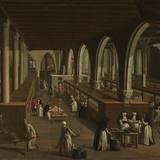 St. John's Hospital and Memling MuseumMuseums and visits · 1 h 30
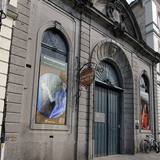 Groeninge MuseumMuseums and visits · 1 h 30
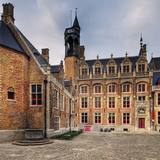 Gruuthuse MuseumMuseums and visits · 1 h 30
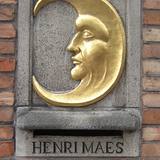 De Halve Maan BreweryMuseums and visits · 1 h 15
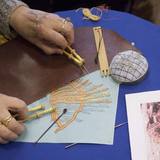 The Lace Center, KantcentrumMuseums and visits · 45 min
Churches
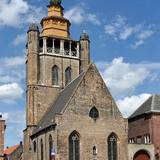
Canals, parks and views
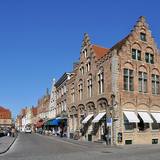 Rosary Quay, Rozenhoedkaai, and HuidevetterspleinCanals, parks and views · 30 minMust-see
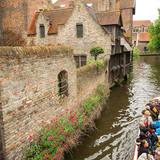 Canal boat rideCanals, parks and views · 45 minMust-see
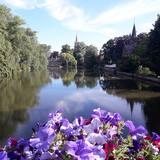 Minnewater, the Lake of LoveCanals, parks and views · 40 minMust-see
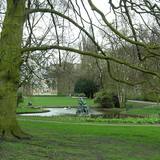 Astrid Park, Koningin AstridparkCanals, parks and views · 40 min
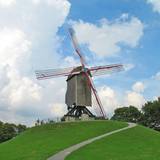 Windmills and ramparts of the KruisvestCanals, parks and views · about 1 h

The full stories, the audio, the offline map and the challenges for kids.