 Peekwick
Dragør
Copenhagen · Amager and the Øresund · Neighborhoods and views · 2 h 30
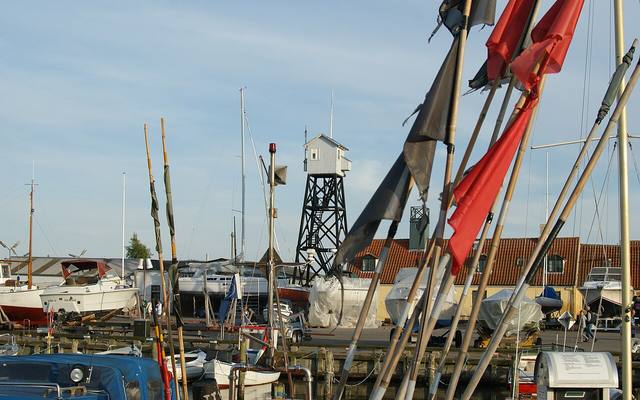
A fishing village
Dragør, pronounced roughly DRAH-ur, lies in the southeast of the island of Amager, facing the Øresund strait. The name tells the whole story. The beginning of the word comes from a verb meaning to pull, because boats were pulled up onto the sand. The end refers to a beach of sand or pebbles. The village was born in the twelfth century around this shore, and it grew quickly thanks to fish. In 1370, the Hanseatic League, that powerful association of merchant towns, obtained trading privileges here. In the nineteenth century, Dragør had one of the largest fishing fleets in Denmark, and fish was prepared here before being sent to the capital. Today, the town has about twelve thousand inhabitants, and its old center has kept almost intact the look of those years of prosperity.
In the app, this story goes on for 6 parts, to read or listen to, with one voice for grown-ups and another for kids.
Seventy-six protected houses
Seventy-six. That is the number of houses that the law protects in the old village of Dragør, so that they are never changed. You will walk along narrow cobbled streets, with yellow houses and red roofs. Dragør is pronounced roughly DRAH-ur, and it is a former fishing village by the sea. Long ago, the inhabitants pulled their boats up onto the sand. The village's name comes from that: a word that means to pull, and a word that means beach. Here, people fished for herring, guided the big ships and lived to the rhythm of the sea.
In the app, this story goes on for 6 parts, to read or listen to, with one voice for grown-ups and another for kids.

The full stories, the audio, the offline map and the challenges for kids.
Read next
 EventsCopenhagen at Christmas with kids: what to do over the 2026-2027 holidaysCopenhagen at Christmas with kids: Tivoli from 13 November to 3 January, Round Tower, Rosenborg, the aquarium and day trips, with opening times to double-check.November 16, 2026
 EventsChristmas markets with kids 2026: 9 cities, dates and tipsVienna, Prague, Brussels, Zagreb, Copenhagen, London: the 2026 dates of Europe's big Christmas markets and festivals, and what kids enjoy in each city.October 13, 2026