 Peekwick
Rosenborg Castle
Copenhagen · Rosenborg and Nørreport · Monuments · 1 h 30
A royal country house
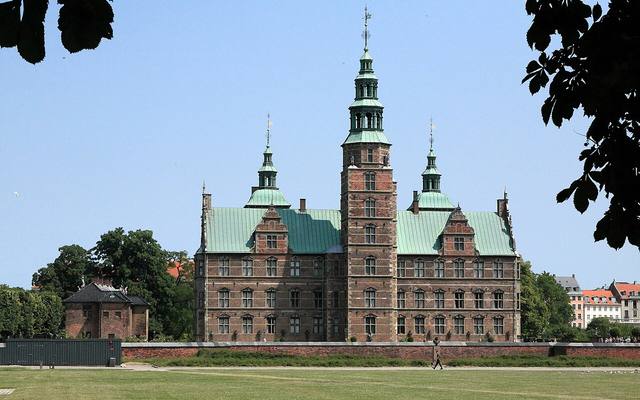
Rosenborg, pronounced ROH-zen-bor, was born from a simple whim. In 1606, King Christian IV bought land beyond the ramparts of Copenhagen to make a garden. He had a summer pavilion built there. But the king did not know when to stop. In nearly thirty years, the pavilion was enlarged four times, until it became the castle you see today, finished in 1634. Two architects are credited with it, Bertel Lange and Hans van Steenwinckel the Younger. The result is a model of Dutch Renaissance: red brick, light sandstone ornaments, turrets and gables. The king put a lot of himself into it. He followed the plans closely, and you can see it in the harmony of the whole.
In the app, this story goes on for 6 parts, to read or listen to, with one voice for grown-ups and another for kids.
The king who wanted a hideaway
Imagine a king who already owns great palaces. Yet he wants a little house just for himself, in a garden, far from the noise of the city. His name was Christian IV. In 1606, he bought land outside the ramparts of Copenhagen. He had a summer house built. Then he added a floor, a tower, another tower. He loved to build. Rosenborg Castle, pronounced ROH-zen-bor, is the result. It is made of red brick, with turrets, and it almost looks like a castle from a fairy tale. You are standing in front of a king's favorite house.
In the app, this story goes on for 7 parts, to read or listen to, with one voice for grown-ups and another for kids.

The full stories, the audio, the offline map and the challenges for kids.