 Peekwick
Théodore Monod Museum of African Art
Dakar · Plateau, historic heart and port · Museums and arts · 1 h 15
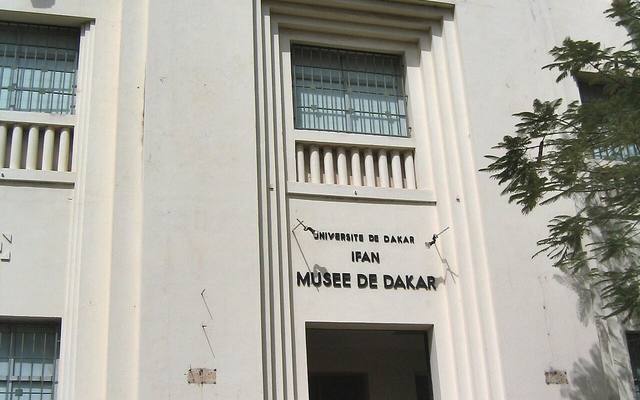
A building from the 1930s
The museum occupies a building put up in the early 1930s, in the Neo-Sudanese style fashionable at the time. This style borrows the forms of West African mud architecture. You can see its echo in the zigzags that run along the tops of the walls and in the rows of small round pillars under the windows. The building was not designed to be a museum. It first housed the headquarters of the general administration of French West Africa. It stands on Place Soweto, next to the National Assembly. This neighbor is more recent: its first stone was laid in 1954, and it was inaugurated in 1956 as the seat of the Grand Council of French West Africa. It is the work of the architects Daniel Badani and Pierre Roux-Dorlut.
In the app, this story goes on for 7 parts, to read or listen to, with one voice for grown-ups and another for kids.
A scholar in the desert
Do you know who crossed the Sahara by dromedary, the one-humped camel, for more than sixty years? His name was Théodore Monod. He was a French scholar passionate about nature. He wrote more than twelve hundred scientific texts, and he lived to be ninety-eight. In 1927, in Mali, he even found the skeleton of a man who had lived thousands of years ago. In Dakar, he ran a big research institute for many years, and this museum bears his name. In 1948, off Dakar, he even went down under the sea in a bathyscaphe, to twenty-five meters.
In the app, this story goes on for 6 parts, to read or listen to, with one voice for grown-ups and another for kids.

The full stories, the audio, the offline map and the challenges for kids.