Peekwick
Lake Bled
Ljubljana · Parks, gardens and zoo · about 6 h
A Lake at the Foot of the Alps
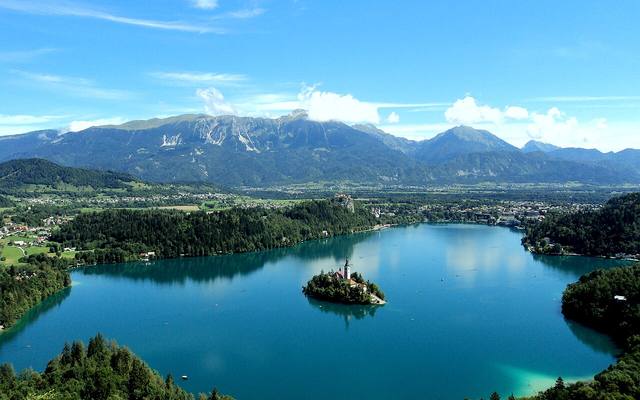
Lake Bled is one of the most famous postcards of Slovenia. It lies about fifty-five kilometres north-west of Ljubljana, at 475 metres above sea level, at the foot of the Julian Alps. It is a lake of glacial origin. It is a little over two kilometres long and less than a kilometre and a half wide, and its maximum depth is close to thirty metres. A thermal spring feeds it, so the water often reaches twenty-two to twenty-six degrees in midsummer. You can therefore swim in it, which surprises visitors who came for the mountains. The place has been inhabited and revered for a very long time. Near the shore, gold ornaments more than three thousand years old have been found. Specialists see in them a Bronze Age place of worship. The walk around the lake is about six kilometres on a flat path. With stops, it takes an hour and a half to two hours. The view changes at every turn: sometimes the castle on its cliff, sometimes the island in the middle of the water, sometimes the summits in the background.
In the app, this story goes on for 6 parts, to read or listen to, with one voice for grown-ups and another for kids.
An Island in the Middle of the Lake
Look closely at the lake in front of you. In the middle of the water, a small island carries a white church and a pointed bell tower. It is the only natural island in the whole of Slovenia. To get there, there is no bridge and no big boat. You step into a pletna, a wooden boat, and a rower takes you, standing up, with an oar in each hand. A pletna can carry twenty people at once. The rowers have had this job for a very long time. In 1740, Empress Maria Theresa decided that twenty-two Bled families alone would have the right to take pilgrims across. Today, many rowers are the descendants of those families. During the crossing, listen: you can hear the water, the oars and sometimes a bell in the distance.
In the app, this story goes on for 6 parts, to read or listen to, with one voice for grown-ups and another for kids.

The full stories, the audio, the offline map and the challenges for kids.