 Peekwick
Ljubljana
Slovenia
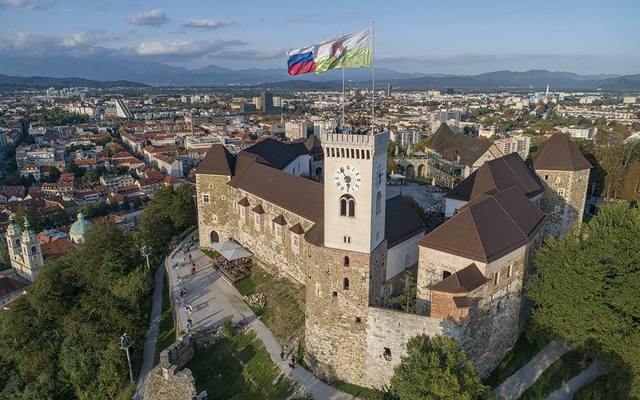
A capital on a human scale
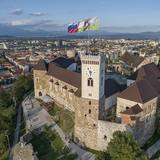
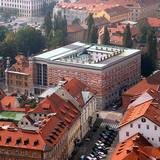
Ljubljana is the capital of Slovenia, a small country of about two million people. The city has roughly three hundred thousand inhabitants, and its whole centre can be explored on foot. It stretches along the Ljubljanica, a little river lined with quays, café terraces and bridges. Above the rooftops, a hill carries the castle. Parks and forests begin a few minutes from the centre. This feels like a provincial town rather than a metropolis, and that is a real strength with children: nobody jostles you, and distances stay short.
Two thousand years of history
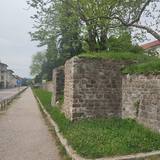
The Romans founded Emona in the first century, and stretches of their walls survive. In the Middle Ages, a small town grew up at the foot of the castle. From the fourteenth century to 1918, the city belonged to the Habsburg empire, under the German name Laibach. Napoleon made it the capital of the Illyrian Provinces from 1809 to 1813. Congress Square recalls a meeting of the great European powers in 1821. In 1895, an earthquake destroyed part of the city. It was rebuilt in the taste of the early twentieth century. Ljubljana then became part of Yugoslavia, and in 1991 it became the capital of an independent country.
Plečnik's city
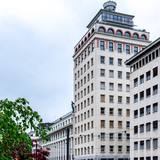
The architect Jože Plečnik, pronounced PLETCH-nik, was born in Ljubljana in 1872. Between the two wars, he redesigned a large part of the centre. To him we owe the Triple Bridge, the riverside arcades of the covered market, the national library and many staircases, columns and small gardens. His works in Ljubljana have been on the UNESCO World Heritage list since 2021.
Three words to understand it
Remember three words: dragon, river, green. The dragon is the emblem of the city. It guards the bridge that bears its name, decorates the coat of arms and hides on the castle. The river sets the rhythm of every stroll. Green, finally, is a political choice: the centre is closed to cars, and the city was European Green Capital in 2016.
A dragon on the bridge
Look up at Dragon Bridge. There, green dragons with open mouths and raised tails stand guard at the four corners. They watch you walk by. In Ljubljana, the dragon is everywhere: on the coat of arms, on the castle and on many building fronts. It is the secret hero of the city, and you are going to learn to spot it.
The legend of the marsh
People say that Jason and the Argonauts, those sailors from Greek myth, stole the Golden Fleece. To escape the people chasing them, they are said to have sailed up the river to the marsh that covered the Ljubljana plain. There, Jason is said to have fought a monster: a dragon. It is a legend, not history, but the city has adopted it. That is why a dragon sits on its coat of arms today.
A city that fits your legs
Ljubljana is small. The castle, the river, the big park and the zoo are only a few kilometres from each other. Many streets in the centre are closed to cars, so you can walk down the middle without danger. And by the water, you can stop for an ice cream without anyone being in a hurry.
Challenge for the trip
All through your stay, count the dragons you find. There are some on bridges, on walls and on shop signs, sometimes tiny ones at the corner of a building. Write the number down in the evening, and watch how it grows over the days. On the last day, the family compares: who found the most?
The quiz
Which animal is the symbol of Ljubljana? Answer: the dragon. There are dragons on the bridge that bears its name, on the city's coat of arms and at the very top of the castle flagpoles. Well done if you guessed it.
Don't miss
Ljubljana Castle and its funicularMonuments and castles · 2 h 30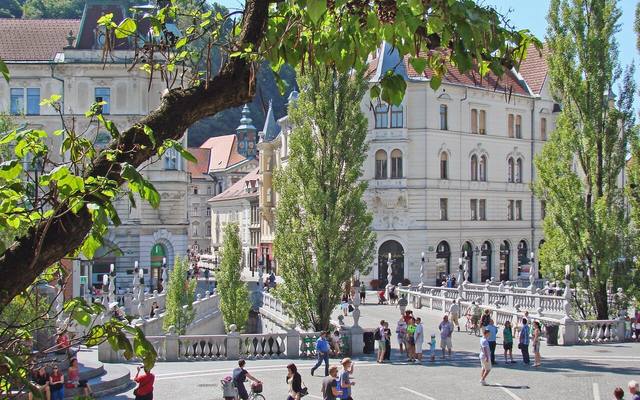 Triple Bridge, TromostovjeSquares, bridges and riverbanks · 30 min
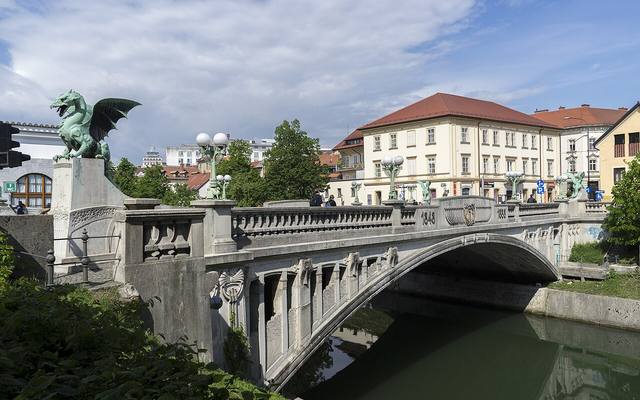 Dragon Bridge, Zmajski mostSquares, bridges and riverbanks · 25 min
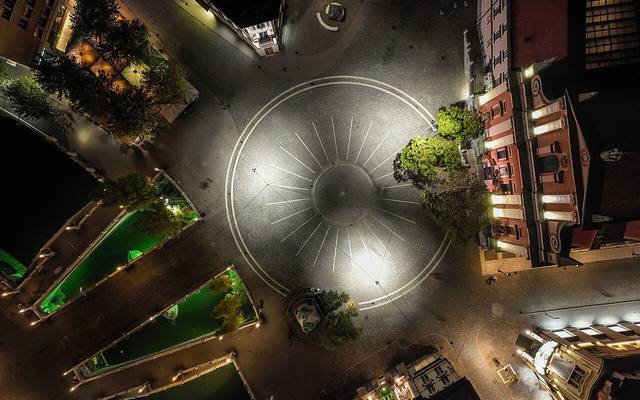 Prešeren Square and the Franciscan ChurchSquares, bridges and riverbanks · 45 min
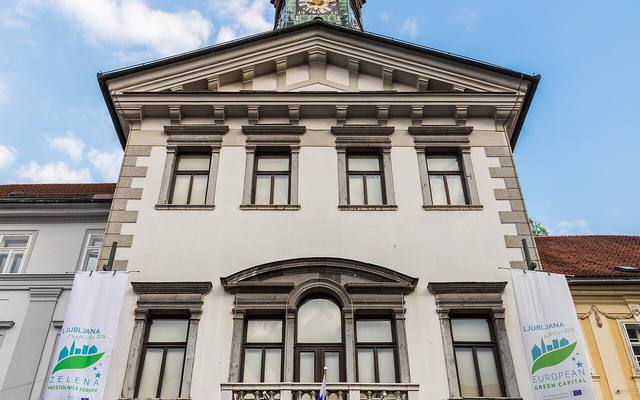 Town Hall Square, Mestni trg, and the Old TownSquares, bridges and riverbanks · about 1 h
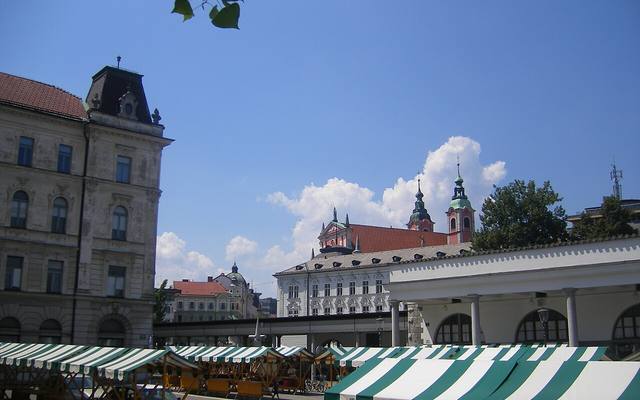 Central Market and the Butchers' BridgeSquares, bridges and riverbanks · about 1 h
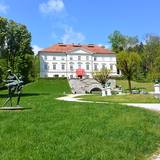
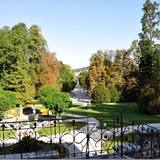
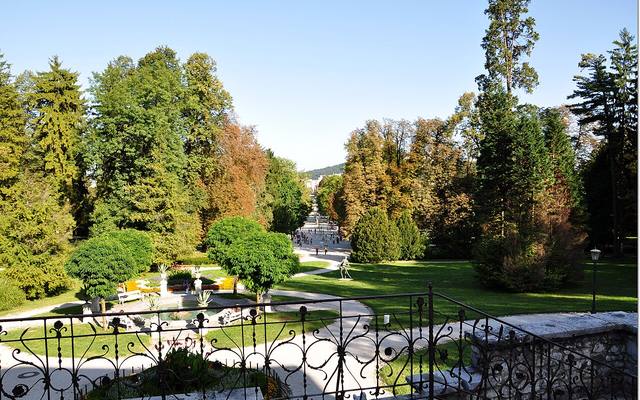 Tivoli ParkParks, gardens and zoo · 1 h 30
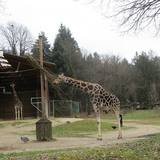
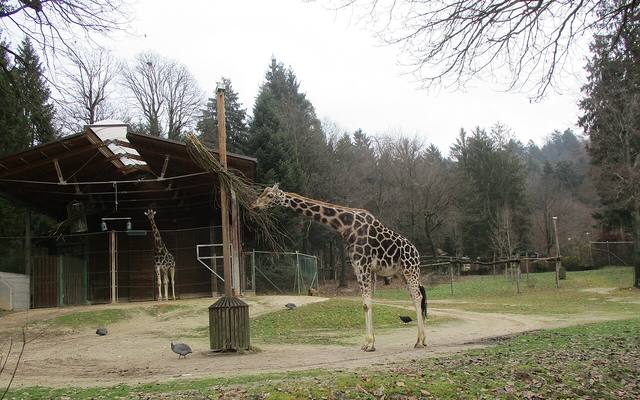 Ljubljana ZooParks, gardens and zoo · about 3 h
All places
Monuments and castles
Squares, bridges and riverbanks
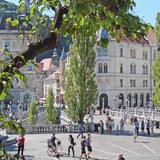 Triple Bridge, TromostovjeSquares, bridges and riverbanks · 30 minMust-see
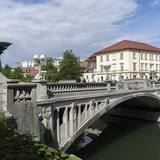 Dragon Bridge, Zmajski mostSquares, bridges and riverbanks · 25 minMust-see
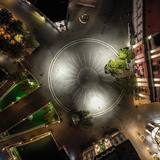 Prešeren Square and the Franciscan ChurchSquares, bridges and riverbanks · 45 minMust-see
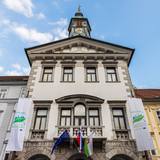 Town Hall Square, Mestni trg, and the Old TownSquares, bridges and riverbanks · about 1 hMust-see
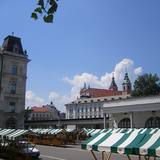 Central Market and the Butchers' BridgeSquares, bridges and riverbanks · about 1 hMust-see
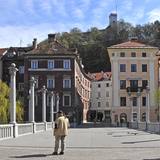 Ljubljanica Quays and the Cobblers' BridgeSquares, bridges and riverbanks · 45 min
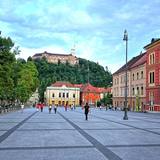 Congress SquareSquares, bridges and riverbanks · 30 min
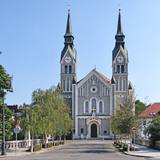 Trnovo and KrakovoSquares, bridges and riverbanks · 1 h 30
Museums and library
Parks, gardens and zoo

The full stories, the audio, the offline map and the challenges for kids.