 Peekwick
Española Way
Miami · South Beach and Art Deco · Neighborhoods, Streets, and Views · 45 min
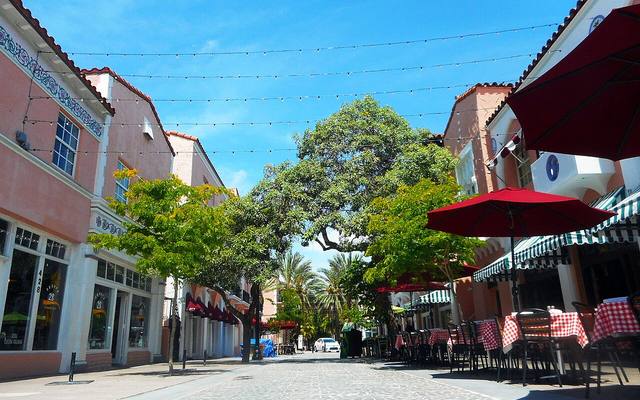
A Spanish Village in Florida
According to the Miami Design Preservation League, a developer named Whitman launched the street around 1922 as Whitman's Spanish Colony. In 1925, Roney, the developer of the famous Roney Plaza hotel, bought it with the Spanish Village Corporation. He called it the Historic Spanish Village and dreamed of setting up an artists' colony there, like Greenwich Village in New York. The architect Robert Taylor imitated villages on the Spanish coast, including San Sebastián and Fuenterrabía, and French resorts like Biarritz and Cannes. The timing was bad, though. The Florida real estate market began to sink that year, and the 1926 hurricane finished off the great boom. The street runs west from Collins Avenue, between Fourteenth and Fifteenth Streets. It is called Española Way, the Spanish street, and two of its blocks, between Washington Avenue and Pennsylvania Avenue, are also called Plaza de España.
In the app, this story goes on for 6 parts, to read or listen to, with one voice for grown-ups and another for kids.
A Village from Spain
A century ago, a developer named Roney had a funny idea: turn a street in Florida into a Spanish village. Not a real one, of course, but a setting so pretty that you would feel you had traveled. The street had already existed since 1922, started by another developer, Whitman. In 1925, Roney bought it and renamed it the Historic Spanish Village. He dreamed of seeing artists there, like in an artists' neighborhood of New York. Today, it is called Española Way, which means the Spanish street.
In the app, this story goes on for 7 parts, to read or listen to, with one voice for grown-ups and another for kids.

The full stories, the audio, the offline map and the challenges for kids.