 Peekwick
Little Haiti Cultural Complex
Miami · Wynwood, Design District, and Little Haiti · Neighborhoods, Streets, and Views · about 1 h
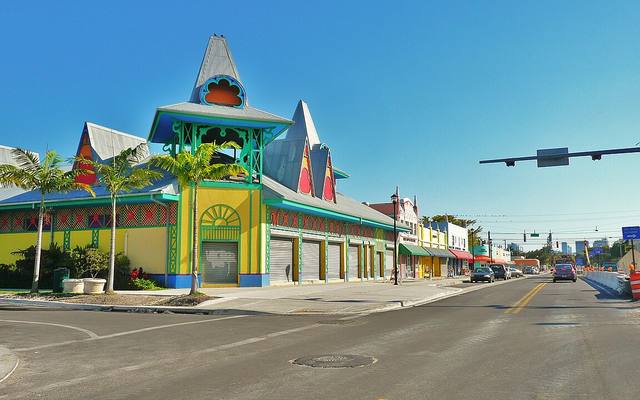
From Lemon City to Little Haiti
After the Civil War, settlers moved to the area north of the Miami River. A post office named Motto opened around 1889, and the place was called Lemon City by 1893. When the railroad reached Miami in 1896, the neighboring city eclipsed Lemon City. Yet the neighborhood kept that name for more than a century. In the 1970s and 1980s, it became the heart of Florida's Haitian community. The businessman and activist Viter Juste gave it its new name. According to a former history teacher, he had first written about Little Port-au-Prince in a Miami Herald article, and the editors shortened the headline to Little Haiti. In May 2016, the city of Miami made it an official neighborhood.
In the app, this story goes on for 6 parts, to read or listen to, with one voice for grown-ups and another for kids.
A market from Port-au-Prince
We are standing in front of a big, brightly colored market in Miami. Yet the idea for this building was born in Port-au-Prince, the capital of Haiti, a Caribbean country. Here, many people speak Creole, a language that sounds like French but has its own words and its own music. In Port-au-Prince, there is a famous iron market. It was built in Paris for a train station in Cairo, Egypt. The project was canceled, so the president of Haiti bought it and had it shipped to Haiti in 1891.
In the app, this story goes on for 7 parts, to read or listen to, with one voice for grown-ups and another for kids.

The full stories, the audio, the offline map and the challenges for kids.