 Peekwick
Flora Fountain and Hutatma Chowk
Mumbai · Fort, Kala Ghoda and Churchgate · Monuments and heritage · 20 min
The Old Church Gate
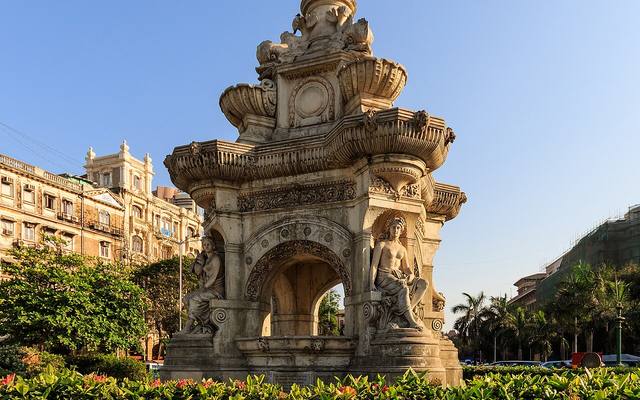
To understand Flora Fountain, you have to imagine ramparts. The English East India Company built Bombay Fort between 1686 and 1743. It had three gates: Apollo Gate, Bazaar Gate and Church Gate. The last led to Saint Thomas Church, today the cathedral. In the 1860s, Governor Sir Bartle Frere ordered the ramparts torn down, since they had become a brake on the city's growth. The fountain was raised on the exact spot where Church Gate stood. The name stayed: it names the Churchgate district and its station. To the north runs Dadabhai Naoroji Road, sometimes called the mile-long road. It links the square to Crawford Market and the big northern station. Dadabhai Naoroji, a figure of the Indian national movement, was elected in 1892 to the British House of Commons.
In the app, this story goes on for 5 parts, to read or listen to, with one voice for grown-ups and another for kids.
Her Name Is Flora
Her name is Flora, she is about two meters tall, and she sits enthroned at the very top of a pale stone fountain. Flora is a Roman goddess, the goddess of flowers and spring. Her stone comes from England, from the Portland region. The sculptor was a Scot named James Forsyth. Since 1864, Flora has watched the cars, buses and pedestrians of Mumbai go by, without ever blinking.
In the app, this story goes on for 7 parts, to read or listen to, with one voice for grown-ups and another for kids.

The full stories, the audio, the offline map and the challenges for kids.