 Peekwick
Kala Ghoda, the Arts District
Mumbai · Fort, Kala Ghoda and Churchgate · Streets, markets and views · about 1 h
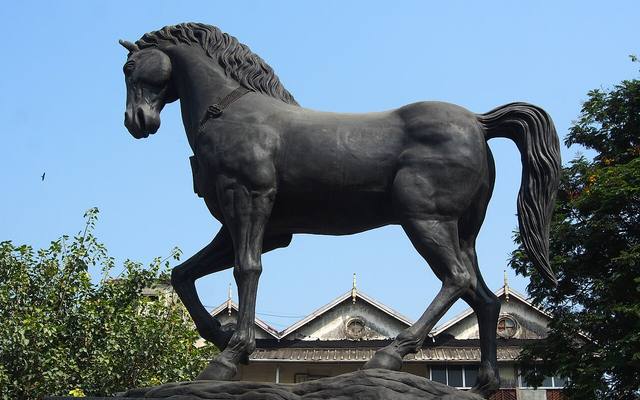
Edward VII's Black Horse
Kala Ghoda means black horse in Marathi. The name comes from an equestrian statue of the Prince of Wales, the future Edward VII, who had visited India in 1875. The sculptor Joseph Edgar Boehm, born in Vienna and based in London, made it, and the businessman and patron Albert Sassoon gave it to the city. Unveiled in 1879, it gave its name to the crossroads, then to the whole district. In 1965, the statue was removed and placed in the Byculla zoological garden. The name stayed. In 2017, the district association, the Kala Ghoda Association, had a new black horse installed, with no rider, titled Spirit of Kala Ghoda. The architect Alfaz Miller designed it, and the sculptor Shreehari Bhosle made it. It stands at the end of the parking lot, near the entrance of Kaikhushru Dubash Marg. It is a few meters from where the original statue stood, and a short walk from the Jehangir Art Gallery. An urban legend says that the prince of the original statue and King Shivaji fight at night in the street. The equestrian statue of Shivaji stands near the Gateway of India.
In the app, this story goes on for 6 parts, to read or listen to, with one voice for grown-ups and another for kids.
The Statues That Fight
They say that every night at midnight, two stone riders step down from their pedestals and fight in the middle of the street. One is an English prince on horseback, who used to stand here. The other is King Shivaji, also on horseback, near the Gateway of India. It is a legend, of course: nobody has ever seen it. But it shows that the people of Mumbai love to invent stories about their statues.
In the app, this story goes on for 7 parts, to read or listen to, with one voice for grown-ups and another for kids.

The full stories, the audio, the offline map and the challenges for kids.