Peekwick
Palais Garnier
Paris · The Louvre, the Tuileries and the Palais-Royal · Monuments · about 1 h
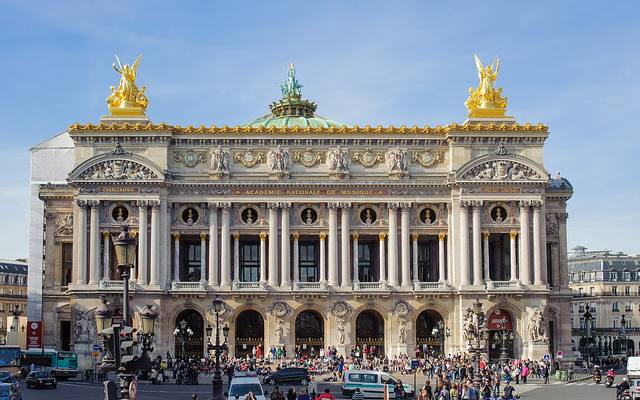
An opera born from an assassination attempt
On January 14, 1858, Emperor Napoleon III escaped a bomb attack in front of the old opera house on Rue Le Peletier. He decided to have a new hall built, with a protected entrance for his carriage. A competition was launched in 1860. Out of 171 designs, the one by an unknown thirty-five-year-old, Charles Garnier, was chosen. Construction lasted from 1861 to 1875 and employed seventy-three sculptors and fourteen painters. The emperor, driven out in 1870, never saw his opera. It was inaugurated on January 5, 1875, under the Republic. When Empress Eugénie asked what this style was, neither Greek nor Louis XV, Garnier is said to have answered that it was the Napoleon III style.
In the app, this story goes on for 6 parts, to read or listen to, with one voice for grown-ups and another for kids.
A lake hidden under the stage
What do you do when an underground river hides under the ground of an opera house? In 1861, when the workers dug the foundations, the water kept rising. It was impossible to pump out. So the architect Charles Garnier had a brilliant idea: build an immense concrete basin under the stage and let it fill up. The weight of the water keeps the building from moving. This lake still exists, in the dark, under the dancers. Firefighter divers come to train there. And this lake gave a writer the idea for a famous story: The Phantom of the Opera.
In the app, this story goes on for 6 parts, to read or listen to, with one voice for grown-ups and another for kids.

The full stories, the audio, the offline map and the challenges for kids.