 Peekwick
Peking Man Site at Zhoukoudian
Beijing · Western Hills · Museums · about 3 h
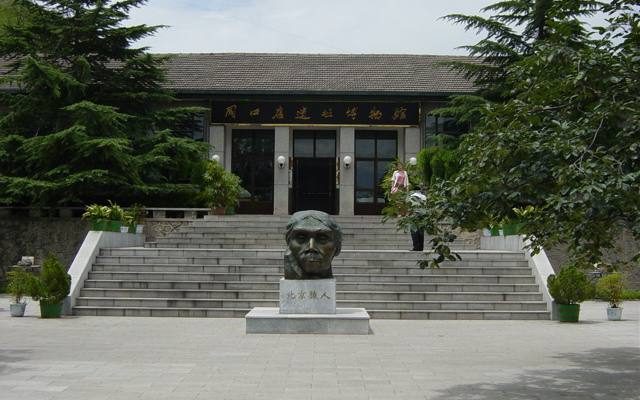
Teeth in a hill
The site is about fifty kilometers southwest of central Beijing, in Fangshan District. The locals first called the hill Chicken Bone Hill, then Dragon Bone Hill, Longgushan. In 1921, the Swedish geologist Johan Gunnar Andersson noticed a white quartz that did not belong to the area. He understood that the place might hide traces of humans. A young Austrian paleontologist, Otto Zdansky, dug there the same year and found a human tooth. He did not announce it right away. In 1926, a second tooth was identified. The following year, the Canadian anatomist Davidson Black gave a name to this new being: Sinanthropus pekinensis, the Chinese man of Peking.
In the app, this story goes on for 6 parts, to read or listen to, with one voice for grown-ups and another for kids.
Pei Wenzhong's skull
His name was Pei Wenzhong, and he was looking for bones in a cave. On December 2, 1929, he found something very special: an almost whole skull, several hundred thousand years old. The news went around the world. It was the skull of Peking Man, a very ancient human who lived in China, long before the emperors. The place is called Zhoukoudian, fifty kilometers southwest of Beijing.
In the app, this story goes on for 6 parts, to read or listen to, with one voice for grown-ups and another for kids.

The full stories, the audio, the offline map and the challenges for kids.