 Peekwick
Arcos da Lapa
Rio de Janeiro · Lapa and Santa Teresa · Monuments and history · 25 min
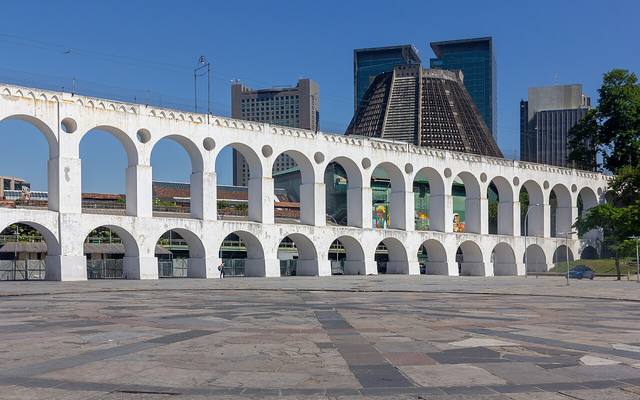
Water from the hill
In the early eighteenth century, Rio was thirsty. The city stretched between the bay, marshes and hills, and its inhabitants depended on wells and a few springs. The best water came down the Carioca River, a small torrent that rushed down the Santa Teresa hill. As early as 1602, Governor Martim Correia de Sá dreamed of bringing it to the center. But work only really began in 1718. Around 1723, a first series of arches was finished. They are now called the Arcos Velhos, the old arches. They carried the water to Largo da Carioca, where residents came to fill their jars at the fountain.
In the app, this story goes on for 7 parts, to read or listen to, with one voice for grown-ups and another for kids.
A bridge without a river
Do you know why this big two-level stone bridge crosses no river? Look closely: underneath, there is only the street and the passersby. Yet it was not built for cars or trains. At first, it was an enormous stone pipe. It carried fresh water from the top of the hill to the center of Rio. At that time, people had no faucets. They came to fill their buckets at a fountain, and without this water, the city could not have grown.
In the app, this story goes on for 6 parts, to read or listen to, with one voice for grown-ups and another for kids.

The full stories, the audio, the offline map and the challenges for kids.