 Peekwick
Tijuca National Park
Rio de Janeiro · Tijuca Forest · Nature and viewpoints · about 4 h
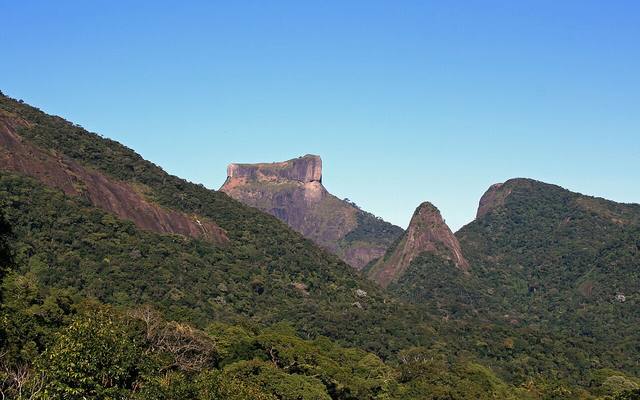
A mountain laid bare
Around 1860, the Tijuca massif had almost no trees left. It was once covered by Atlantic forest, the humid tropical forest that ran along the whole Brazilian coast. The colonists cut it down for charcoal and construction timber. They then planted sugar cane, then coffee, on slopes that were far too steep. The soils wore out and the mountain springs dried up. Yet these springs supply Rio with drinking water. Periods of drought left the city without water, and sudden rains caused floods. Emperor Pedro II understood that without forest, there would soon be no rivers. In 1861, the emperor ordered the land around the springs to be protected, and the state bought back the farms on the mountain.
In the app, this story goes on for 7 parts, to read or listen to, with one voice for grown-ups and another for kids.
One hundred thousand trees by hand
One hundred thousand trees. That is the number tradition tells when people talk about this forest. They were planted one by one, by hand, by a very small team. You are in one of the largest urban forests in the world, but it has not always been here. In 1860, this mountain looked like a bald head. Not a tree on the slopes, only earth and coffee fields. So how did a bald mountain become a jungle?
In the app, this story goes on for 7 parts, to read or listen to, with one voice for grown-ups and another for kids.

The full stories, the audio, the offline map and the challenges for kids.