 Peekwick
Museu Histórico Nacional
Rio de Janeiro · Historic Centro · Museums and culture · 1 h 30
A fortified point of land
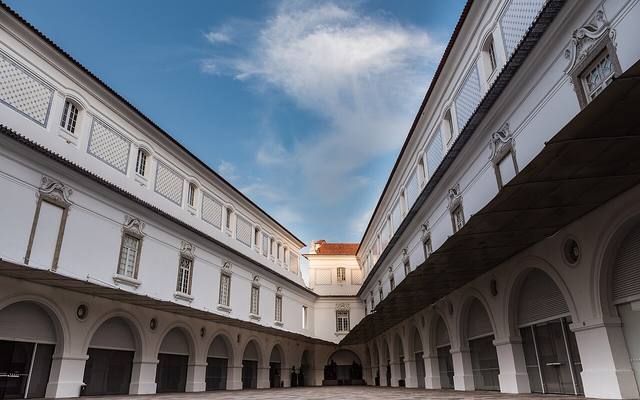
The Museu Histórico Nacional occupies a point of land that once jutted into Guanabara Bay. The Portuguese built a small fort there as early as 1603, the fort of São Tiago da Misericórdia, to watch over the entrance to the port. Only its foundations remain today. Over the decades, the place filled up with military buildings. It kept this role for more than three centuries, until 1908, when the arsenal moved to another part of the city. Each building tells of an era. The Calabouço, built in 1693, served as a prison where enslaved people were locked up. The Casa do Trem dates from 1762. The word trem here means artillery equipment, cannons and ammunition, which was stored there. The war arsenal followed in 1764, then a barracks in 1835. This ensemble explains the museum's layout: big closed courtyards surrounded by galleries, as in a fortress.
In the app, this story goes on for 6 parts, to read or listen to, with one voice for grown-ups and another for kids.
A fort on the sea
Do you know why this museum looks like a fortress? Because it was one! In 1603, Portuguese soldiers built a small fort here, on a point of land that juts into the water. Their mission was to watch for enemy ships that might want to enter Guanabara Bay. Today, you can only see the foundations of the fort. But the old buildings around it are still there.
In the app, this story goes on for 7 parts, to read or listen to, with one voice for grown-ups and another for kids.

The full stories, the audio, the offline map and the challenges for kids.