Peekwick
Saint Peter's Basilica
Rome · Vatican and Castel Sant'Angelo · Vatican · 1 h 30
From Constantine to Michelangelo
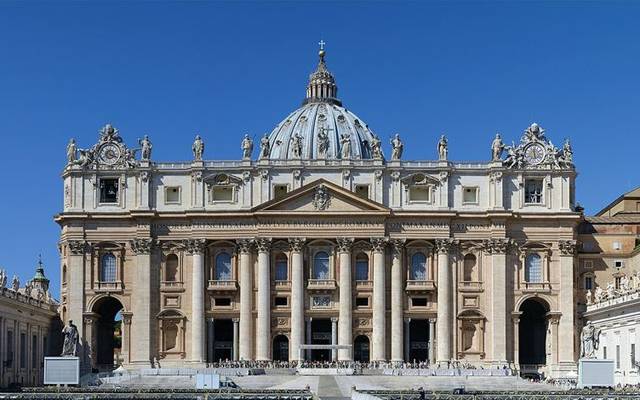
Around 320, Emperor Constantine had a first basilica built over the presumed tomb of the apostle, leveling the ancient cemetery and the slope of the hill. This church had five aisles and was more than one hundred meters long. It saw the crowning of Charlemagne on Christmas Day in the year 800 and the first Jubilee, in 1300. In the fifteenth century, it fell into ruin and risked collapse. On April 18, 1506, Julius II laid the first stone of the new building designed by Bramante. It was shaped like a cross with four equal arms, under an immense dome. Raphael, Peruzzi, and Antonio da Sangallo followed one another. Then Michelangelo, appointed in 1547 at over seventy, simplified the plan and designed the dome, which Giacomo della Porta finished in 1590. Carlo Maderno lengthened the nave and raised the facade between 1607 and 1614. Urban VIII consecrated the basilica on November 18, 1626, one hundred twenty years after the first stone. Meanwhile, the sale of indulgences, paid pardons for sins meant to fund the construction, had set off Luther's revolt in 1517.
In the app, this story goes on for 6 parts, to read or listen to, with one voice for grown-ups and another for kids.
A size that tricks the eye
The Statue of Liberty, with its pedestal, would stand upright under the dome of this basilica. Almost two soccer fields placed end to end would fit in the nave. The golden letters running along the top of the walls are as tall as you. The baby angels holding the holy water fonts at the entrance, those big bowls of blessed water, are taller than a grown-up. Yet when you walk in, everything looks normal. The architects made everything bigger in the same proportions to fool your eye. To grasp the real size, look at the people far away at the end. They look like real ants. Look down too. Bronze markers in the floor of the nave show where the other great churches would end, like Saint Paul's in London. All of them are shorter.
In the app, this story goes on for 8 parts, to read or listen to, with one voice for grown-ups and another for kids.

The full stories, the audio, the offline map and the challenges for kids.