 Peekwick
Holambra, the town of flowers and the windmill
São Paulo · Neighborhoods, markets, and views · about 5 h
Three words in one name
The name Holambra is a blend of three words: Hol for Holanda, which means Holland, Am for América, and Bra for Brasil. The town was born on July 14, 1948. Dutch Catholic immigrants settled then on the former Ribeirão farm, a large agricultural estate in the interior of the state of São Paulo. After the Second World War, the Dutch government encouraged part of its population to leave. Brazil was the only country ready to welcome large groups of Catholics. The settlers came from the province of North Brabant. They also founded a farming cooperative to produce milk and dairy products.
In the app, this story goes on for 7 parts, to read or listen to, with one voice for grown-ups and another for kids.
A windmill from Holland
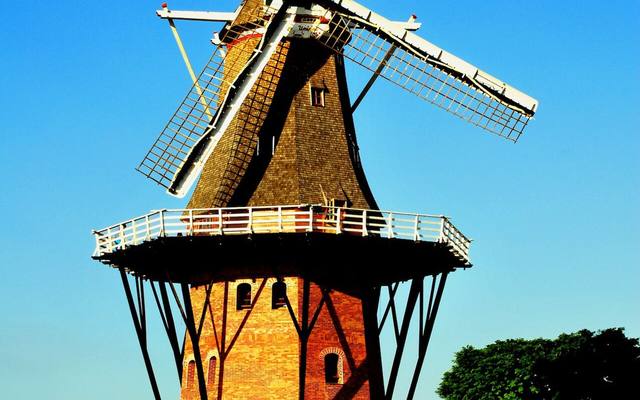
Look at this big red brick tower, with its four huge lattice blades way up high. Do you think you are in Holland? No, you are in Brazil, in Holambra. This is the Moinho Povos Unidos, the tallest windmill in Latin America, at thirty-eight and a half meters. A Dutch architect supervised its construction in 2008. He had already built or repaired about four hundred windmills, and he was eighty-two years old! Each blade is twelve meters long, about the length of a big bus.
In the app, this story goes on for 6 parts, to read or listen to, with one voice for grown-ups and another for kids.

The full stories, the audio, the offline map and the challenges for kids.