 Peekwick
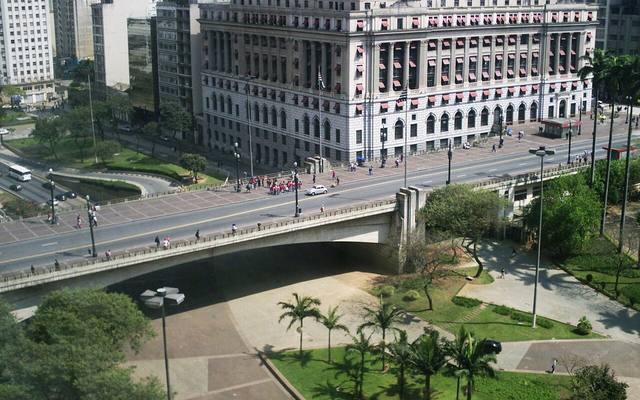
Chá Viaduct and the Anhangabaú Valley
São Paulo · Anhangabaú, Municipal Theater, and República · Neighborhoods, markets, and views · 30 min
A River of the Evil Spirit
The name Anhangabaú comes from Tupi, the language of the Indigenous peoples who lived here before the Portuguese. It is often translated as river of the evil spirit, or the devil's water. According to tradition, Anhangá was a spirit protecting hunting and fishing, which the Portuguese linked with the devil. Other researchers think the name means poisoned water, because its waters, they say, were very rich in iron and acidic. A stream called Saracura, which runs along today's Avenida Nove de Julho, becomes the Anhangabaú here. It flows into the Tamanduateí, near the Municipal Market. In the early twentieth century, the city channeled it and buried it. It still flows under the valley, hidden beneath the pavement.
In the app, this story goes on for 6 parts, to read or listen to, with one voice for grown-ups and another for kids.
A Bridge That Carries a Tea
Do you know why a bridge in São Paulo is named after a hot drink? It is called the Chá Viaduct, which means tea. Long ago, a nearby hill was covered with black tea plantations, and it was called Tea Hill. The bridge was born from the idea of a Frenchman, Jules Martin. When it was inaugurated in 1892, it was the city's first viaduct. It crossed a deep valley, with a river flowing at the bottom.
In the app, this story goes on for 7 parts, to read or listen to, with one voice for grown-ups and another for kids.

The full stories, the audio, the offline map and the challenges for kids.