 Peekwick
Gwangjang Market
Seoul · Dongdaemun, Gwangjang, and Naksan · Neighborhoods and Markets · 1 h 15
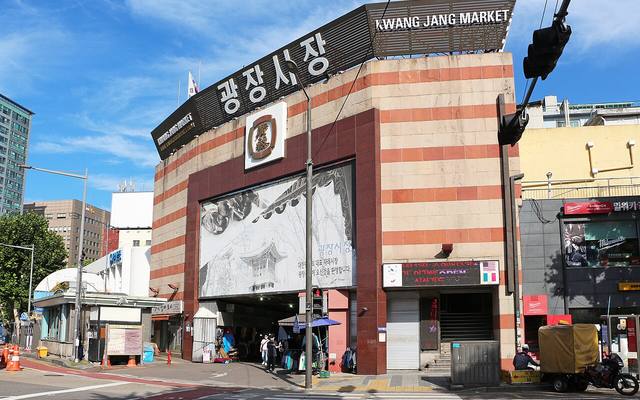
1905, a Market Open Every Day
Gwangjang Market was born in 1905, in a time of upheaval. King Gojong had founded a warehouse market, which became Namdaemun Market. But that year, Korea became a Japanese protectorate, and that market came under Japanese control. A group of Korean investors, including wealthy merchants, then decided to create their own. They founded the Gwangjang company on July 5, 1905, and bought the land. They built on a small morning market already there, called Baeogae. At the time, most markets opened only a few days. This one was first called Dongdaemun Market, and it is often presented as the country's first permanent market, open every day. It took the name Gwangjang only in 1960. The name comes from two neighboring bridges, the wide bridge and the long bridge.
In the app, this story goes on for 6 parts, to read or listen to, with one voice for grown-ups and another for kids.
Sizzling in the Aisle
It is noon in a covered aisle. Smoke rises, oil crackles in big pans, and a vendor is already holding out a plate to you. All around you, people eat seated on small stools, very close to one another. Welcome to Gwangjang Market! Here, people do not come only to buy. They come to eat, look, smell, and taste. And if you feel a bit shy, watch how the customers do it. You point at what you want, you smile, and the dish arrives.
In the app, this story goes on for 6 parts, to read or listen to, with one voice for grown-ups and another for kids.

The full stories, the audio, the offline map and the challenges for kids.