 Peekwick
National Museum of Modern and Contemporary Art, Seoul
Seoul · Gyeongbokgung, Gwanghwamun, and Seochon · Museums · 1 h 30
A Museum Without Walls
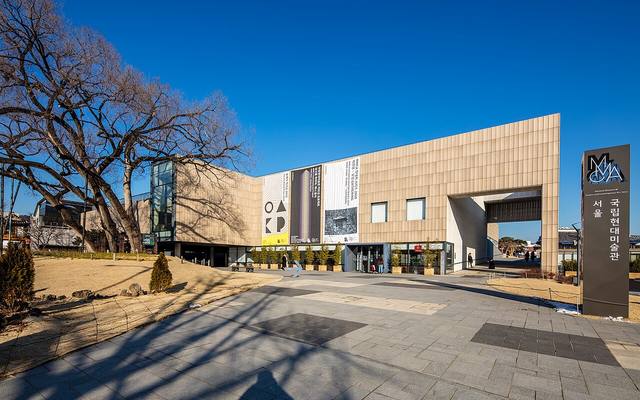
The Seoul museum opened on November 13, 2013, next to Gyeongbokgung. Its architect, Min Hyun-joon, chose not to build one big block. He scattered low buildings around courtyards that Koreans call madang. A madang is the courtyard of a traditional house, where people entertain, work, and celebrate. There is no wall or threshold at the entrance, and you can walk into the courtyards without a ticket. The complex has three levels above ground and three below. Its height is limited to about twelve meters, which fits with the neighborhood of palaces and traditional houses. The new buildings are clad in terra cotta tiles, in four light shades. Eight galleries are linked by underground levels, including the Seoul Box, seventeen meters tall, for giant installations.
In the app, this story goes on for 6 parts, to read or listen to, with one voice for grown-ups and another for kids.
A Giant Playground
Your school surely has a yard to play and run in. Here, the museum did the same thing, only bigger: courtyards everywhere, with no wall around. In Korean, a courtyard is called a madang. In a traditional house, it is where you welcome friends, throw parties, and where kids play. The museum kept this idea. You walk in from the street, cross the courtyards, and you are already in the art, without even opening a door.
In the app, this story goes on for 6 parts, to read or listen to, with one voice for grown-ups and another for kids.

The full stories, the audio, the offline map and the challenges for kids.