 Peekwick
Ryōgoku Kokugikan
Tokyo · Ryogoku · Monuments and towers · 30 min
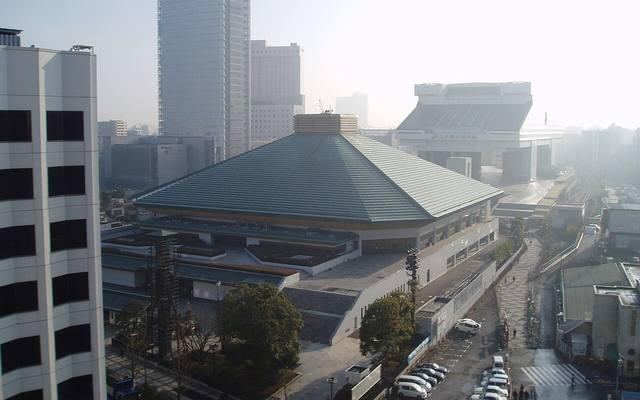
The birth of a sumo arena
For centuries, sumo matches took place outdoors, in temple grounds, and depended on the weather. In 1906, the Japanese Parliament decided to build a covered hall in the Ryogoku district, near Ekoin temple. The work lasted three years, and the first Kokugikan opened its doors on June 2, 1909, with a capacity of about thirteen thousand spectators. The name Kokugikan means hall of the national sport, a way of officially recognizing sumo as the emblematic discipline of the country. Before this construction, organizers had to postpone matches in bad weather, which strongly limited the competition calendar.
In the app, this story goes on for 6 parts, to read or listen to, with one voice for grown-ups and another for kids.
Two giants in a circle
Sometimes more than one hundred fifty kilograms each: that is the weight of these two huge wrestlers, who push each other with all their strength out of a circle. This is sumo, a very old Japanese sport. The Kokugikan is the biggest hall in the country to watch this impressive show. A match can last only a few seconds, so you have to stay alert. Some wrestlers follow very strict training from a young age to reach this level. They often live together in a kind of school devoted only to sumo.
In the app, this story goes on for 6 parts, to read or listen to, with one voice for grown-ups and another for kids.

The full stories, the audio, the offline map and the challenges for kids.