Peekwick
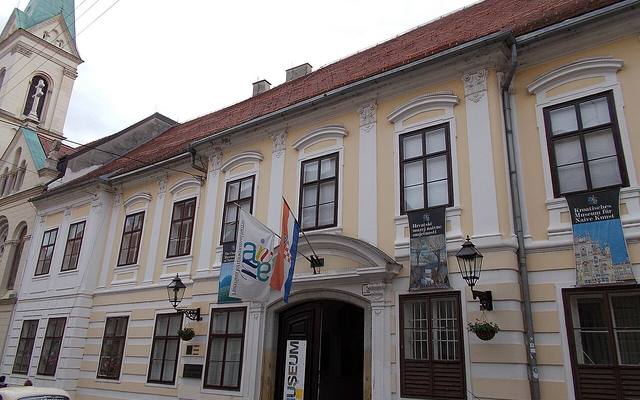
Croatian Museum of Naïve Art
Zagreb · Gornji Grad, the Upper Town · Museums · 45 min
Peasants who paint
In 1930 a young painter named Krsto Hegedušić founded the Hlebine school, named after a village in northern Croatia, near the Hungarian border. His idea was to encourage peasants to paint what they knew, without drawing lessons or an academy. Among them was a teenager, Ivan Generalić, born in 1914. Hegedušić noticed his sketches, made in pencil on paper bags. In 1931 he helped him show his first drawings to the public, in Zagreb. The movement started from there. It is called naïve art, a word that means artists without training, not simple artists.
In the app, this story goes on for 6 parts, to read or listen to, with one voice for grown-ups and another for kids.
A very special classroom
In your class, you are taught to draw with a ruler, to colour without going over the lines and to do perspective. Here it is the opposite. The painters in this museum never learned to paint. They were peasants who picked up brushes to tell the story of their village. They did not worry about the rules. They used bright colours and village scenes. And they became famous all over the world.
In the app, this story goes on for 6 parts, to read or listen to, with one voice for grown-ups and another for kids.

The full stories, the audio, the offline map and the challenges for kids.