 Peekwick
Beguinage, Begijnhof
Bruges · Beguinage, Minnewater and parks · Monuments · 30 min
Women alone and free
The beguinage of Bruges is called Begijnhof in Dutch, pronounced roughly buh-KHAYN-hof. Its official name is Ten Wijngaerde, meaning at the vineyard. It was born around 1225, in the south of the city, in a damp corner on the edge of the Reie, the little river that runs through Bruges. At that time, wars, crusades and the merchants' long journeys left many women alone: widows, girls without a dowry, unmarried women. They banded together to live together, pray and work. They were called beguines. In 1245, the Countess of Flanders, Margaret of Constantinople, obtained official recognition of the community from the Bishop of Tournai and placed it under her protection. The beguines then had their own church, their own rules and their own grand mistress.
In the app, this story goes on for 6 parts, to read or listen to, with one voice for grown-ups and another for kids.
Listen before you go in
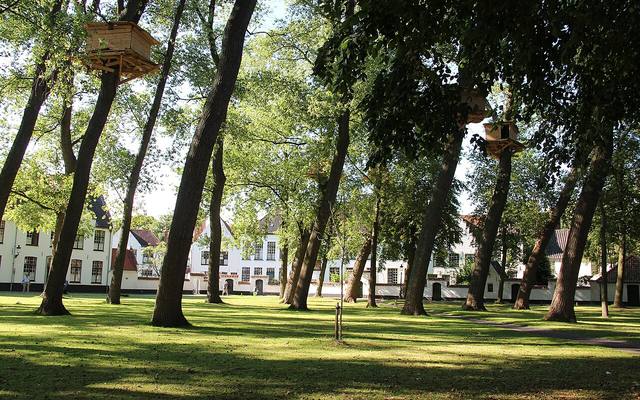
Stand on the little stone bridge. Say nothing for ten seconds. Do you hear the water flowing under your feet? The steps on the cobblestones? A bird maybe? Now walk under the vaulted gate. Do you see? The noise of the city has just disappeared, as if someone had pressed the mute button. Welcome to the beguinage, which the people here call the Begijnhof, buh-KHAYN-hof. It is a little village hidden in Bruges, with a big lawn, white houses and very tall trees. And this silence is the real treasure of the place.
In the app, this story goes on for 6 parts, to read or listen to, with one voice for grown-ups and another for kids.

The full stories, the audio, the offline map and the challenges for kids.