 Peekwick
Guimarães, Cradle of Portugal
Porto · Monuments · 4 h 30
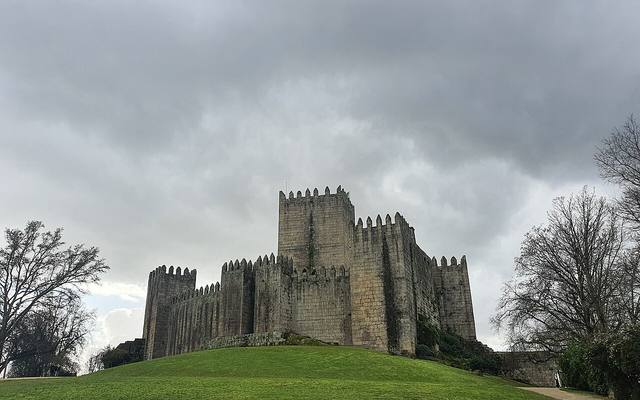
Mumadona and Her Castle
In the tenth century, Countess Mumadona Dias founded a monastery in Guimarães, then a castle to protect it against Moorish and Norman raids. A document dated December 4, 968, already describes it as new, under the name Castle of São Mamede. The present castle is mostly late Romanesque and early Gothic. King Denis I reworked it at the end of the thirteenth century and the start of the fourteenth. The two towers framing the entrance date, depending on the source, from the late thirteenth century or from the reign of John I, between 1383 and 1433. The castle fell into ruin: in 1793 its walls were judged useless, and in 1836 town councilors proposed demolishing it to pave the streets. The proposal was not accepted. The site was restored from 1937, then reopened in 1940.
In the app, this story goes on for 6 parts, to read or listen to, with one voice for grown-ups and another for kids.
A Boy Who Became King
His name was Afonso Henriques, and, according to tradition, he was born in Guimarães more than nine hundred years ago. Historians aren't sure of the exact place or the year, but the town is very proud of him. When he grew up, Afonso won a battle near here, at São Mamede, in 1128. He defeated the army of his own mother and her ally, and he took power over the region. Later, according to tradition, his soldiers proclaimed him king. He became the first king of Portugal. That is why Guimarães has a nickname: the town where Portugal was born.
In the app, this story goes on for 7 parts, to read or listen to, with one voice for grown-ups and another for kids.

The full stories, the audio, the offline map and the challenges for kids.