 Peekwick
Independence Park and Monument
São Paulo · Ipiranga and Mooca · Monuments and history · 45 min
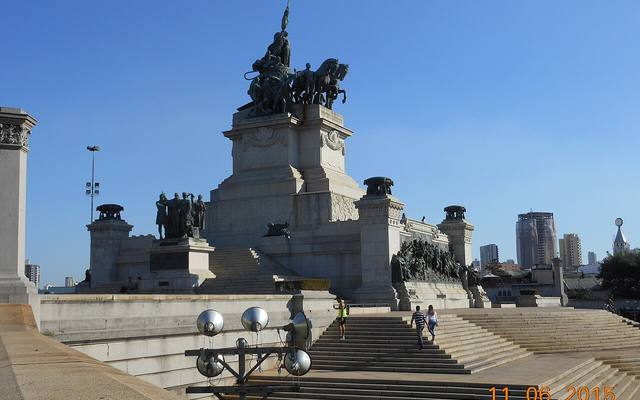
The Altar of the Fatherland
The Independence Monument, which the Paulistanos also call the Altar da Pátria, the altar of the fatherland, stands beside the Ipiranga stream. Paulistano means a resident of the city of São Paulo. It is made of granite and bronze. It was designed by the Italian sculptor Ettore Ximenes, born in Palermo in 1855, and by the Italian architect Manfredo Manfredi. It was inaugurated on September 7, 1922, for the centennial of independence, but still unfinished. At this spot, according to tradition, Pedro I of Brazil, Dom Pedro I in Portuguese, had uttered his cry a hundred years earlier.
In the app, this story goes on for 6 parts, to read or listen to, with one voice for grown-ups and another for kids.
A Giant Bronze Scene
Look up, at the very top of the monument. Two bronze horses pull a chariot, where a woman raises a banner to represent liberty. Lower down, a big high relief shows horsemen, horses, and swords. This is the cry of Ipiranga, in giant size and all in bronze. The sculptor, an Italian named Ettore Ximenes, was inspired by the big painting in the nearby museum. Some even said he had copied it. He won a competition where twenty-seven projects were competing. And he set up his own foundry in the neighborhood, to melt the bronze right here.
In the app, this story goes on for 6 parts, to read or listen to, with one voice for grown-ups and another for kids.

The full stories, the audio, the offline map and the challenges for kids.