 Peekwick
Ipiranga Museum
São Paulo · Ipiranga and Mooca · Museums and science · 2 h 30
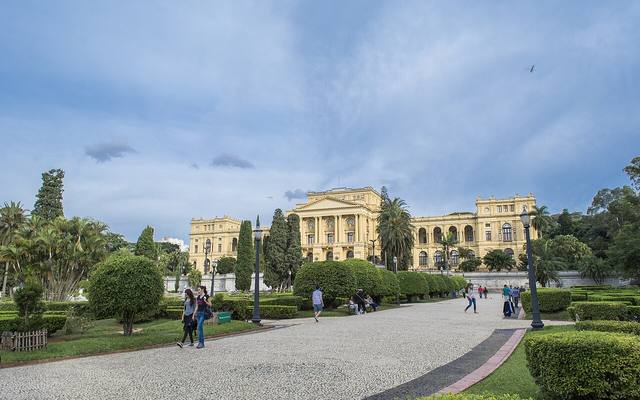
A Palace to Mark the Spot
The Ipiranga Museum is officially called the Paulista Museum of the University of São Paulo. Paulista means from the state of São Paulo. It stands on the hill where, according to tradition, Pedro I of Brazil, Dom Pedro I in Portuguese, proclaimed independence on September 7, 1822. The idea of a monument was discussed as early as 1823, but it was postponed for lack of money. September 7 only became a national holiday in 1826. The project only moved forward in the late 1880s. In that decade, the Italian architect and military engineer Tommaso Gaudenzio Bezzi was commissioned to design a palace, and construction began in 1885.
In the app, this story goes on for 7 parts, to read or listen to, with one voice for grown-ups and another for kids.
A Cry by the Stream
It is September 7, 1822, on a dirt road, beside a tiny stream. A twenty-three-year-old prince, Pedro, is reading letters that arrived from Rio de Janeiro. They say that Portugal wants to take away his power and send him back to Europe. His wife, Leopoldina, also writes to him, according to historians, that the fruit is ripe and he must pick it right away, or it will rot. The fruit is independence! Pedro must choose. The story goes that he tears the armband of his uniform, a sign of Portugal, off his sleeve and shouts: "Independence or death!" This stream is called the Ipiranga. And it is here, according to tradition, that Brazil said goodbye to Portugal.
In the app, this story goes on for 7 parts, to read or listen to, with one voice for grown-ups and another for kids.

The full stories, the audio, the offline map and the challenges for kids.