 Peekwick
Gwanghwamun Plaza
Seoul · Gyeongbokgung, Gwanghwamun, and Seochon · Neighborhoods and Markets · 45 min
The Center of the Capital
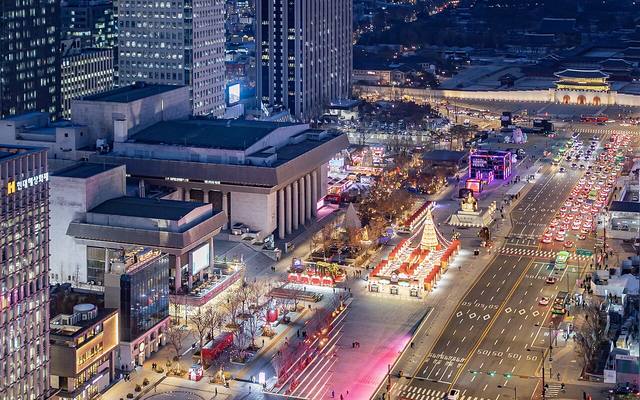
When the Joseon dynasty founded its capital in 1394, the great avenue leading to Gwanghwamun Gate became the center of the state. The offices of the six ministries lined both sides. It was therefore called Yukjo-geori, the Street of the Six Ministries: yuk means six, jo means ministry, and geori means street. In the twentieth century, the avenue was widened to sixteen traffic lanes. In 2009, the city cut it to ten lanes and opened the first Gwanghwamun Plaza on August 1. The plaza closed at the end of 2020 for major works. It reopened on August 6, 2022, with its area more than doubled, to about forty thousand square meters, because the roadway on the west side was covered over. More than five thousand trees were planted there.
In the app, this story goes on for 6 parts, to read or listen to, with one voice for grown-ups and another for kids.
Five Soccer Fields
Forty thousand square meters! That is more than five soccer fields, right in front of a palace. Before 2022, a very wide avenue ran here, with cars everywhere. Now you can walk in the middle of the plaza, among thousands of trees. Under your feet, there was also a very old street. Long ago, the great avenue leading to the palace was called the Street of the Six Ministries. The king's ministers had their offices there, and archaeologists have found pieces of their buildings.
In the app, this story goes on for 6 parts, to read or listen to, with one voice for grown-ups and another for kids.

The full stories, the audio, the offline map and the challenges for kids.